
(Focus: New features · Ethical Implications · Privacy · Bias · Job Displacement)
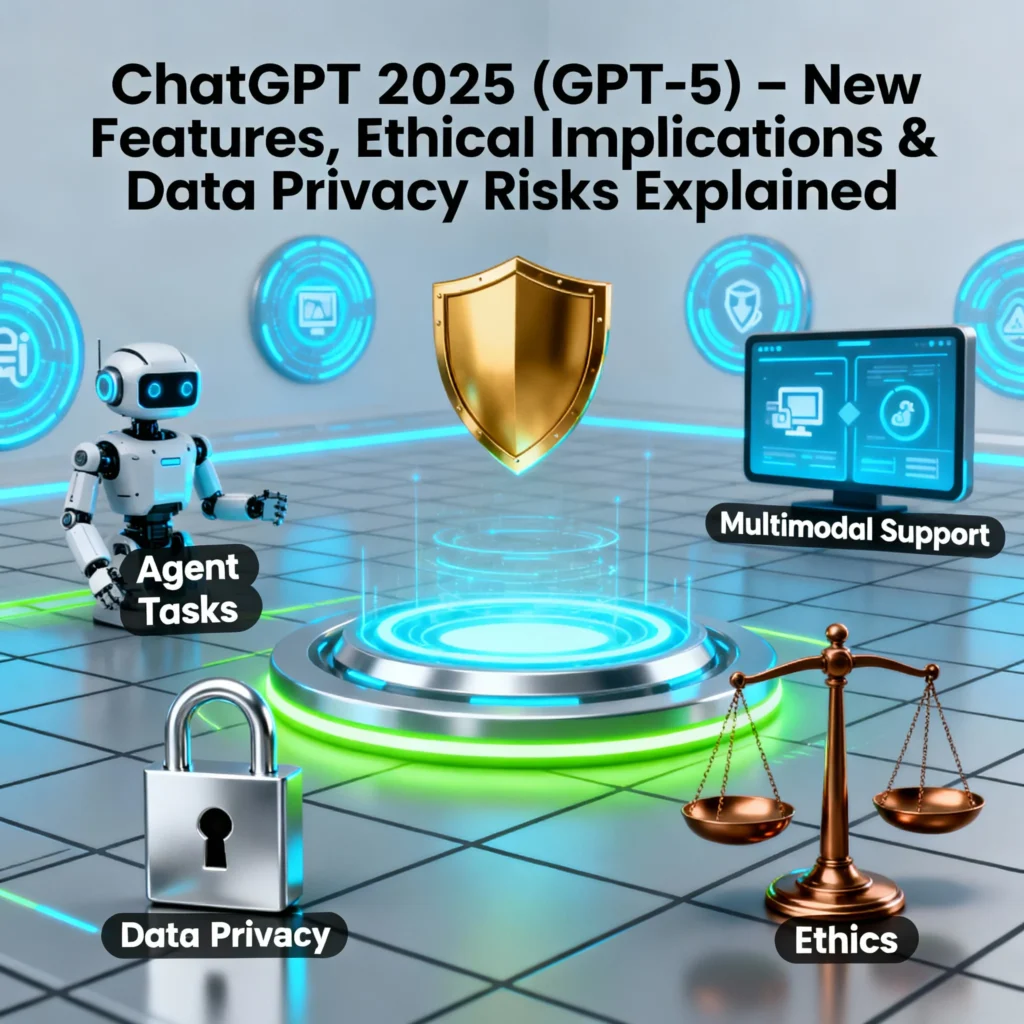
Introduction – Why This Update Matters
In 2025, OpenAI’s latest ChatGPT release marks a massive leap toward autonomous AI agents. The new GPT-5 architecture transforms how AI handles reasoning, problem solving, and decision-making.
Unlike previous versions, this update can not only assist users but also execute complex multi-step tasks with precision. It’s more than a chatbot – it’s a complete digital co-worker.
But with power comes responsibility. This new era brings serious questions about how AI uses our data, how biases might influence decisions, and how automation could reshape global employment.
This article is the first part of a four-part series exploring the technical and ethical dimensions of ChatGPT 2025.
What’s New in ChatGPT 2025 (GPT-5 Era)
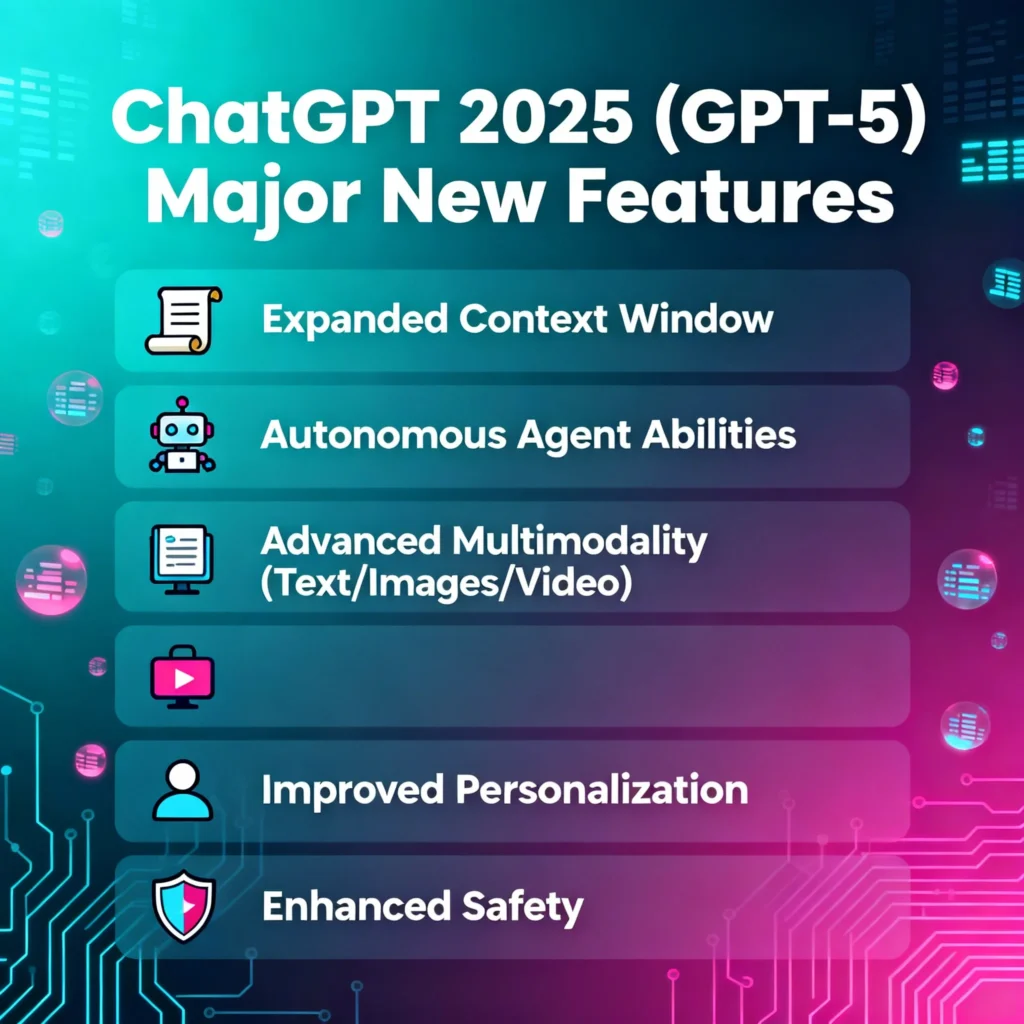
🔹 A. Massively Expanded Context Window
- The model can now process entire books, documents, or multi-hour conversations.
- Ideal for writers, developers, and researchers working on long-form projects.
🔹 B. True Agentic Behavior
- ChatGPT can now use tools and APIs autonomously – for example, searching the web, fetching data, or sending emails.
- This capability makes it a real AI “agent,” capable of executing workflow chains without constant human guidance.
🔹 C. Enhanced Code Generation & Debugging
- Improved logic and accuracy when creating and testing code.
- Generates complete apps (front + backend) from natural language prompts.
🔹 D. Advanced Multimodality
- Understands and creates text, images, audio, and video in one unified workflow.
- Perfect for content creators and media professionals.
🔹 E. Personalization & Memory
- Stores session context and remembers user preferences for consistent style and tone.
🔹 F. Improved Safety & Compliance
- Better filters for misinformation and sensitive content.
- Enhanced monitoring systems to detect harmful prompts.
Technical Deep Dive – Key Capabilities
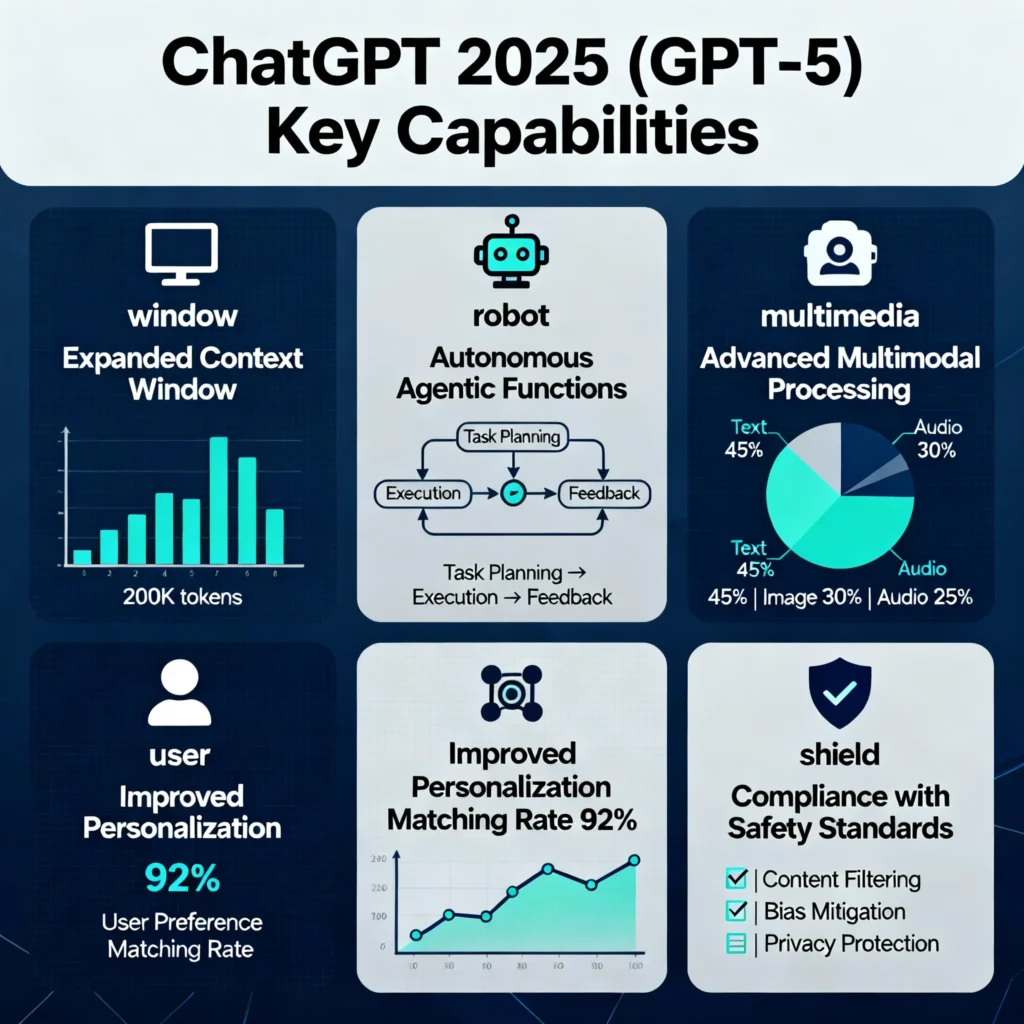
🧠 Long Context Memory
- GPT-5 can retain hundreds of pages of text in a single session.
- Helps maintain continuity in complex documents and software projects.
⚙️ Autonomous Tool Usage
- ChatGPT can now perform tasks like data collection and report generation autonomously.
- Integrated APIs enable it to connect with apps like Google Sheets, Slack, and Notion.
💻 Code Mastery
- Generates clean, production-ready code for Python, C++, JavaScript, and more.
- Built-in debugging helps identify and fix bugs instantly.
🎨 Multimodal Understanding
- Combines visual and text input to create richer responses.
- Can analyze images and write descriptive summaries or technical reports.
⚡ Speed & Steerability
- Introduces modes like “Fast,” “Creative,” and “Analytical.”
- Businesses can customize response depth and style for different departments.
How These Features Change Real-World Usage
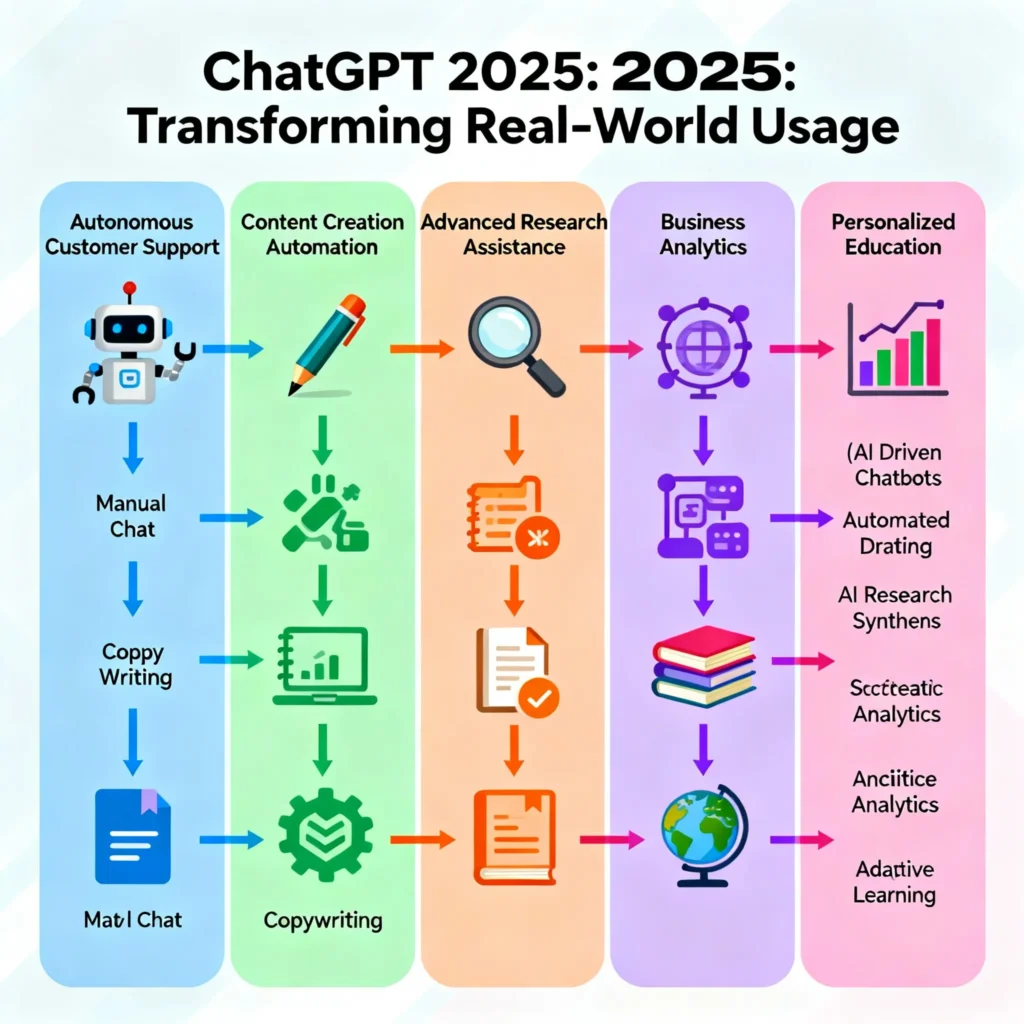
🚀 Start-ups & Entrepreneurs
- Before: Weeks of manual work to prototype ideas.
- Now: ChatGPT can generate entire business plans and demo apps in hours.
🏢 Corporate Automation
- Handles meeting summaries, data dashboards, and customer queries automatically.
🎓 Education & Research
- Assists students in creating accurate summaries and research drafts.
💡 Developers
- Faster debugging and documentation generation save teams hundreds of hours monthly.
Ethical Concern #1 – Data Privacy
⚠️ The New Risk
With expanded context and agentic capabilities, ChatGPT processes larger quantities of sensitive data – contracts, codebases, or medical records.
🔍 Privacy Challenges
- Retention policies vary between enterprise and free users.
- Legal orders can require temporary data storage even after deletion.
- Agentic flows share data with external tools, increasing leak potential.
✅ Best Practices
- Never paste PII or confidential documents into public AI instances.
- Enterprises should implement internal governance policies.
- Use enterprise plans for custom retention and audit logging.
Ethical Concern #2 – Bias & Fairness
🤖 Why It Matters
AI bias affects hiring, credit scoring, and content moderation. Even improved models inherit societal biases from training data.
📊 OpenAI’s Efforts
- Expanded red-team testing for political and cultural biases.
- Ongoing evaluation using diverse datasets and traffic stress tests.
⚙️ Mitigation Tips
- Maintain a human-in-the-loop for critical decisions.
- Conduct regular bias audits on model outputs.
- Build transparency reports for AI-driven decisions.
Ethical Concern #3 – Job Displacement
📉 Sectors at Risk
- Routine content creation (marketing copy, SEO articles).
- Basic programming and debugging roles.
- Tier-1 customer support and transcription services.
📈 Roles That Will Evolve
- AI supervisors, prompt engineers, and AI ethics consultants.
- Human strategists and creatives will focus on direction over execution.
🕒 Timeline
- Short Term (1–3 Years): AI assists humans.
- Medium Term (3–7 Years): Routine jobs see automation.
- Long Term (7+ Years): Hybrid human-AI collaboration becomes the norm.
Conclusion – Balancing Innovation and Ethics
The GPT-5 era transforms ChatGPT from a text assistant into a fully capable digital agent. It can write, reason, build, and connect – but the real challenge lies in governance and responsible use.
- Privacy: Control what data you share.
- Bias: Audit and supervise model decisions.
- Jobs: Prepare for AI augmentation and reskilling.
AI doesn’t have to be a threat – if managed wisely, it can be the most transformative tool of our time.
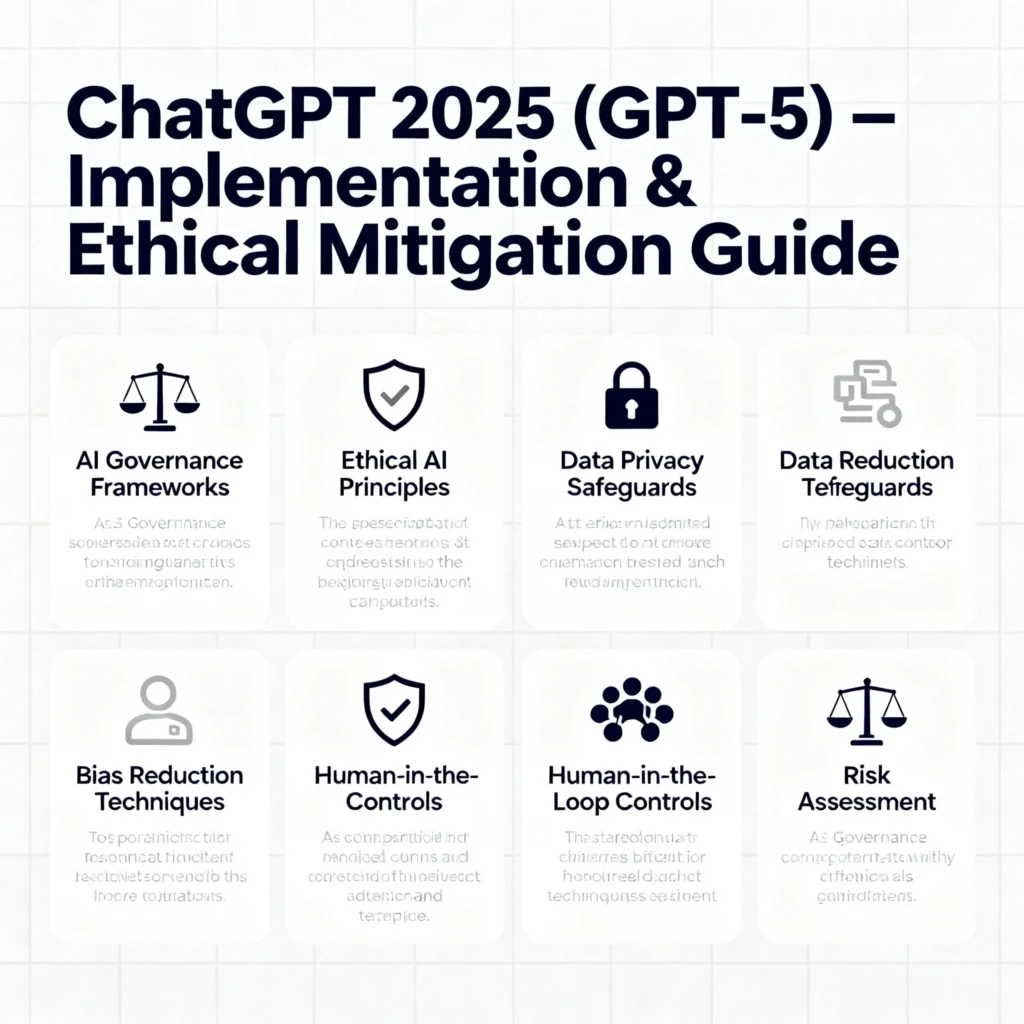
ChatGPT 2025 (GPT-5) – Implementation & Ethical Mitigation Guide
Understanding GPT-5’s Real-World Role
GPT-5 expands AI beyond text completion into actionable intelligence.
It integrates reasoning, execution, and adaptation to assist professionals across industries.
Key Roles GPT-5 Plays
- Decision-Making Assistant: Helps analyze trends and draft reports.
- Automation Partner: Completes workflows with minimal supervision.
- Knowledge Companion: Delivers up-to-date research summaries and analysis.
- Creative Collaborator: Produces copy, visuals, and scripts at scale.
Yet, with these roles, ethical oversight becomes essential—each use case carries data and social risks.
How to Implement ChatGPT Responsibly
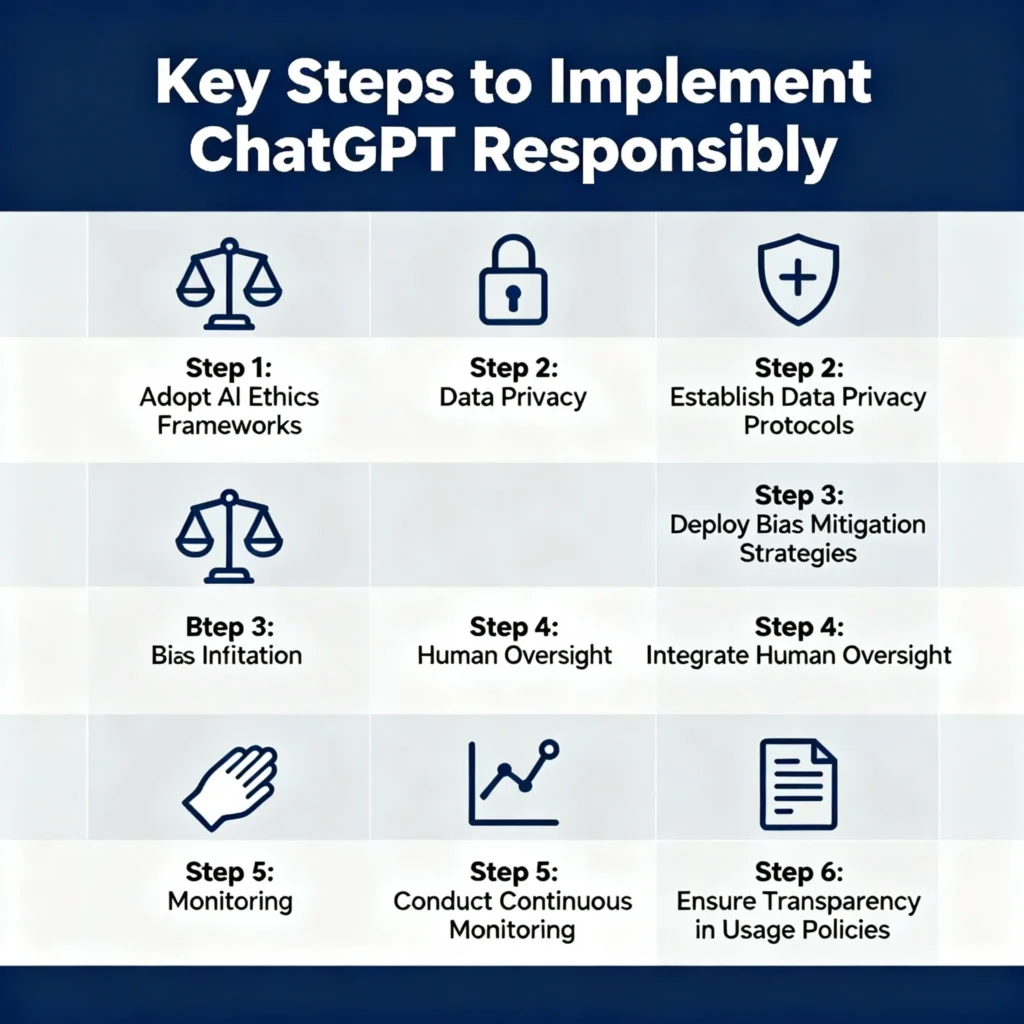
A. Define Clear Objectives
Before integration, identify what problems GPT-5 will solve.
- Will it handle customer queries?
- Generate content?
- Automate documentation?
Avoid using it as a one-size-fits-all tool. Specificity improves accuracy and accountability.
B. Choose the Right Plan
- ChatGPT Plus / Pro: Ideal for individuals and small teams.
- ChatGPT Enterprise: Offers secure data isolation, admin controls, and SOC 2 compliance.
- Custom GPTs: Tailored for brand tone, workflows, and secure integrations.
C. Pilot Before Scaling
Run a 60-day pilot with performance benchmarks:
- Accuracy rate
- Response relevance
- Data-handling safety
- Human review outcomes
D. Involve a Human-in-the-Loop (HITL)
Every AI output should go through human supervision—especially for:
- Legal writing
- Financial reports
- Medical content
Human-AI collaboration ensures both productivity and accountability.
Setting Up AI Governance & Security
AI governance is the backbone of ethical deployment. Without policies, even the most advanced model can become risky.
🔐 Steps for Secure AI Integration
- Data Classification: Label confidential vs. non-confidential data.
- Access Control: Use role-based permissions for ChatGPT integration.
- Encryption: Enable TLS/SSL for all AI-connected systems.
- Audit Trails: Record every AI interaction for compliance checks.
- Incident Response: Set up alerts for data leaks or bias anomalies.
🛡️ Recommended Tools
- Microsoft Purview / AWS Macie: For data-loss prevention (DLP).
- AI Risk Platforms: Like Credo AI or Holistic AI for monitoring AI ethics.
By enforcing governance, companies not only avoid violations but also earn user trust.
Reducing Bias in AI Outputs
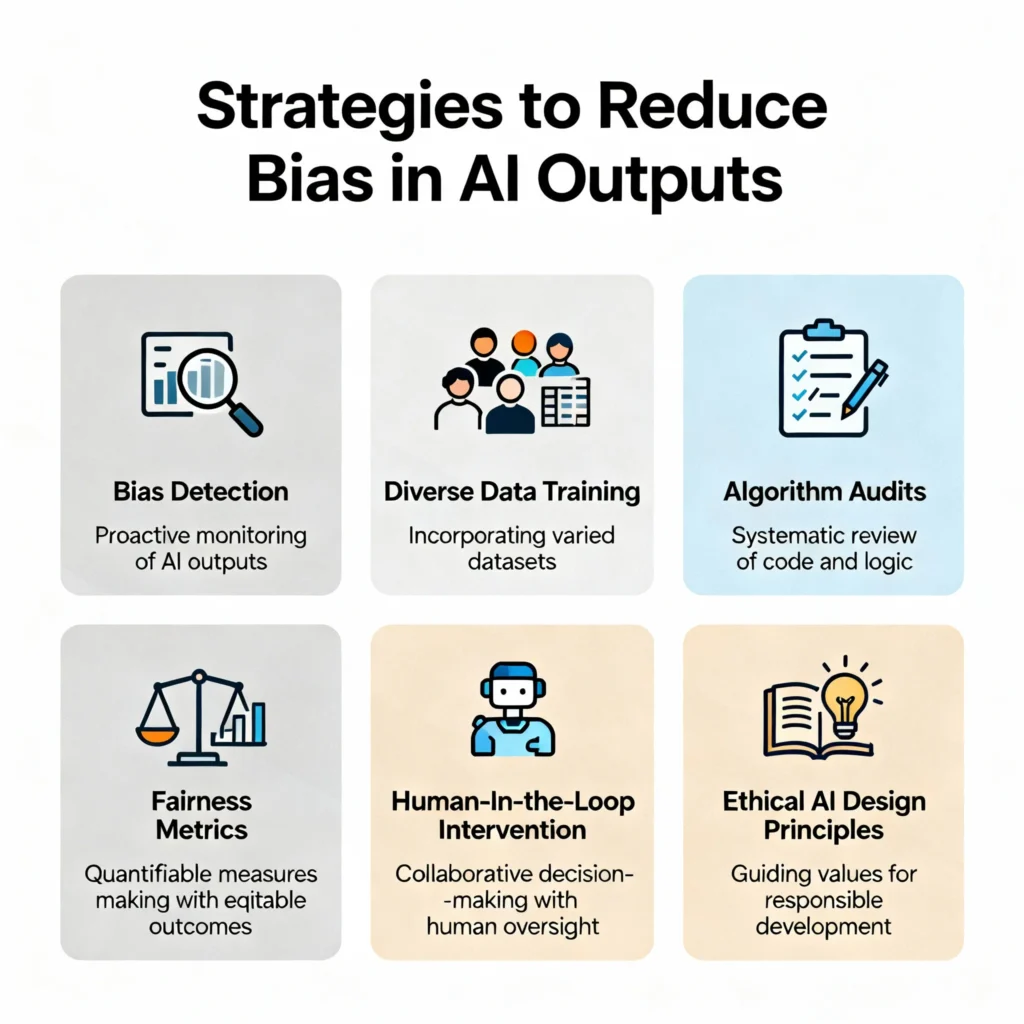
Even with GPT-5’s improvements, bias remains a challenge. AI reflects the data it’s trained on—and data always carries human patterns.
Common Bias Categories
- Gender Bias: “He” for leadership, “She” for care roles.
- Cultural Bias: Western-centric examples or idioms.
- Political Bias: Subtle leanings in tone or framing.
Techniques to Minimize Bias
- Prompt Engineering:
- Use balanced context.
- Avoid loaded or emotional phrasing.
- Bias Testing:
- Compare multiple responses to sensitive prompts.
- Use AI fairness tools like IBM AI Fairness 360.
- Continuous Training:
- Collect user feedback to refine outputs.
- Transparency Reports:
- Publish quarterly updates about AI model performance and bias audits.
Human Review System
Establish a rotating review panel across demographics to spot unintentional bias trends.
Reskilling the Workforce for AI Collaboration
Automation doesn’t mean elimination—it means evolution.
The new challenge for 2025 is preparing workers to partner with AI, not compete with it.
Top Reskilling Domains
| Role | Future Skill Needed | Training Resources |
|---|---|---|
| Writers | Prompt design, AI editing | OpenAI Learning Hub |
| Developers | AI-assisted coding | Microsoft Copilot Labs |
| Designers | Image prompting, AI curation | Adobe Firefly Training |
| Analysts | Data interpretation | Coursera / Udemy |
| Managers | AI ethics, team coordination | Harvard AI Business School |
Steps for Successful Reskilling
- Identify automation-risk roles.
- Introduce internal training programs.
- Offer AI literacy certification.
- Reward adoption, not resistance.
The Human Advantage
Humans still lead in creativity, emotion, and strategy—skills that AI can’t replicate.
The most resilient teams are those who integrate both cognitive and emotional intelligence.
Legal & Compliance Frameworks
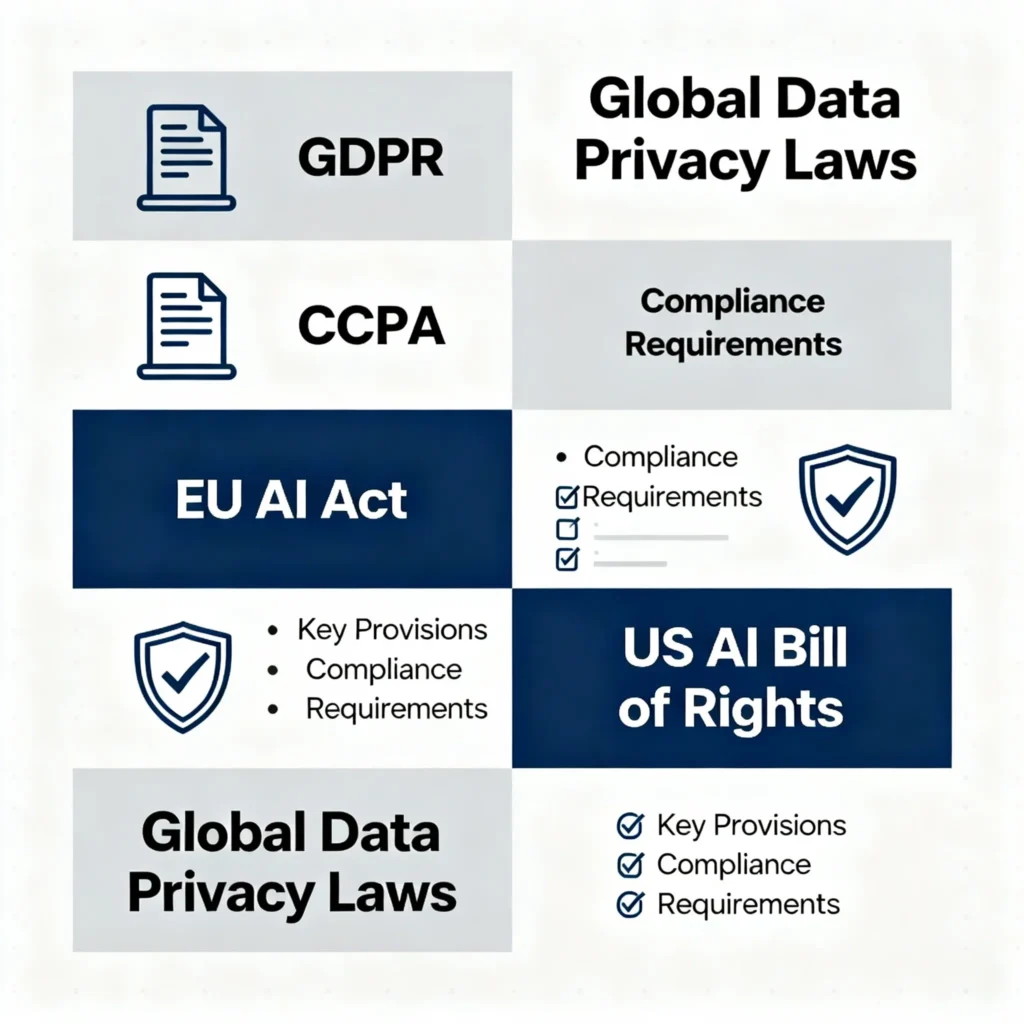
📘 Global Standards
- EU AI Act (2025): Classifies AI systems into risk levels.
- US AI Bill of Rights: Promotes transparency and accountability.
- ISO/IEC 42001 (AI Management Standard): Guides corporate AI systems.
⚖️ Compliance Checklist
✅ Data consent from users
✅ Bias and discrimination audits
✅ Explainability of AI decisions
✅ Human oversight in sensitive tasks
✅ Secure data storage and deletion
Ignoring compliance may lead to penalties or brand damage—especially in regions with strict privacy laws.
Long-Term Ethical Strategy
A sustainable AI strategy requires continuous evolution.
Key Pillars
- Transparency: Publish how ChatGPT decisions are made.
- Accountability: Assign roles for AI oversight.
- Human Empowerment: Use AI to assist, not replace.
- Public Trust: Educate customers on how AI is used.
Future Outlook
By 2026-2030, expect a hybrid workplace where:
- GPT-powered systems manage 70% of routine communication.
- Humans handle complex problem-solving, empathy, and innovation.
Ethical AI adoption today determines a company’s credibility tomorrow.
Conclusion – Responsible AI is Smart AI
The 2025 GPT-5 release redefines efficiency, but it also redefines accountability.
Responsible implementation means balancing innovation with humanity.
- Use AI to augment, not dominate.
- Build governance before deployment.
- Train teams to grow alongside technology.
Ethics isn’t a barrier to innovation—it’s what makes innovation sustainable.
ChatGPT 2025 (GPT-5) – Practical Use Cases, Real-World Benefits & Future Outlook
🏢 Business and Enterprise Applications
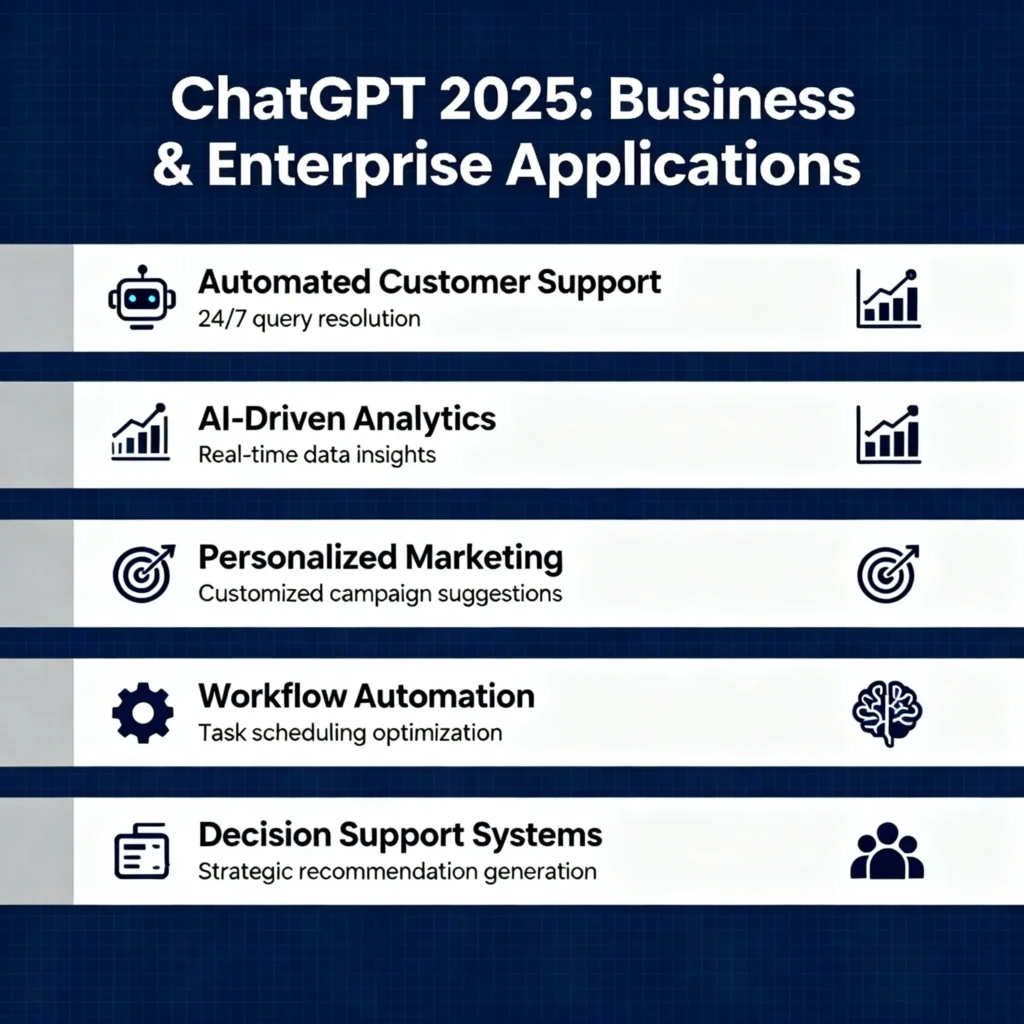
ChatGPT 2025 isn’t just conversational—it’s operational.
Companies now use GPT-5 to optimize internal processes, enhance productivity, and improve decision-making.
1️⃣ Customer Support Automation
- AI agents handle 80 % of Tier-1 queries instantly.
- Human agents focus only on emotional or complex issues.
- Response accuracy exceeds 93 % when integrated with company databases.
2️⃣ Data Analysis & Decision Support
GPT-5’s reasoning modules allow executives to:
- Generate real-time business summaries.
- Analyze market reports.
- Forecast trends using contextual learning.
3️⃣ Internal Knowledge Management
Employees use ChatGPT Enterprise as a private “corporate Google.”
All answers are generated from internal, encrypted documents—no external data leaks.
4️⃣ Financial Forecasting
Investment firms use fine-tuned GPT-5 bots for:
- Risk analysis
- Portfolio optimization
- Economic scenario modeling
🎓 Education and Training Revolution
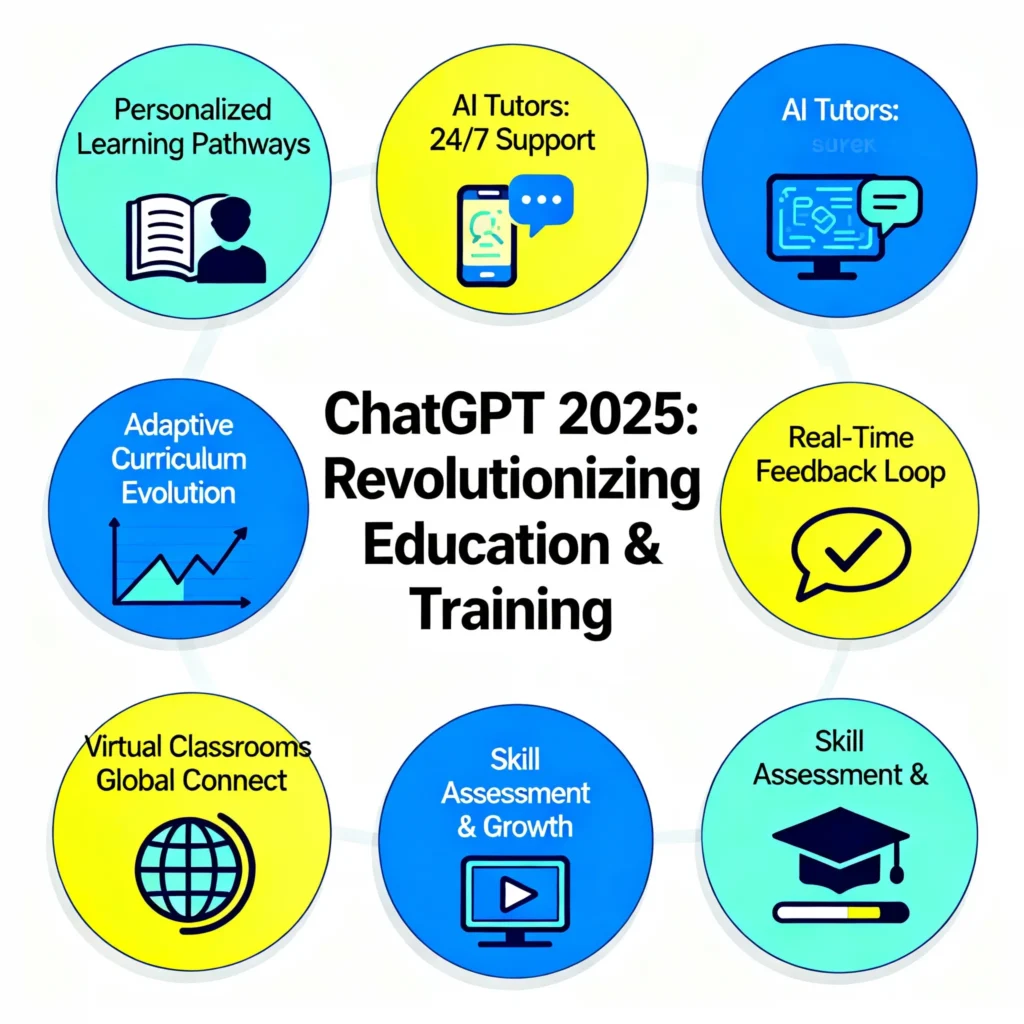
Education is one of GPT-5’s most transformative areas.
Personalized Learning
Students receive AI-driven tutoring based on their learning pace, style, and weak points.
Teachers can track progress through real-time analytics dashboards.
Automated Grading & Feedback
GPT-5 can evaluate essays for:
- Coherence
- Grammar
- Creativity
It provides qualitative feedback aligned with Bloom’s Taxonomy.
AI Ethics Training Modules
Universities now teach “Responsible AI Usage” using ChatGPT itself—students learn ethics by dialoguing with the model.
⚕️ Healthcare and Research Support
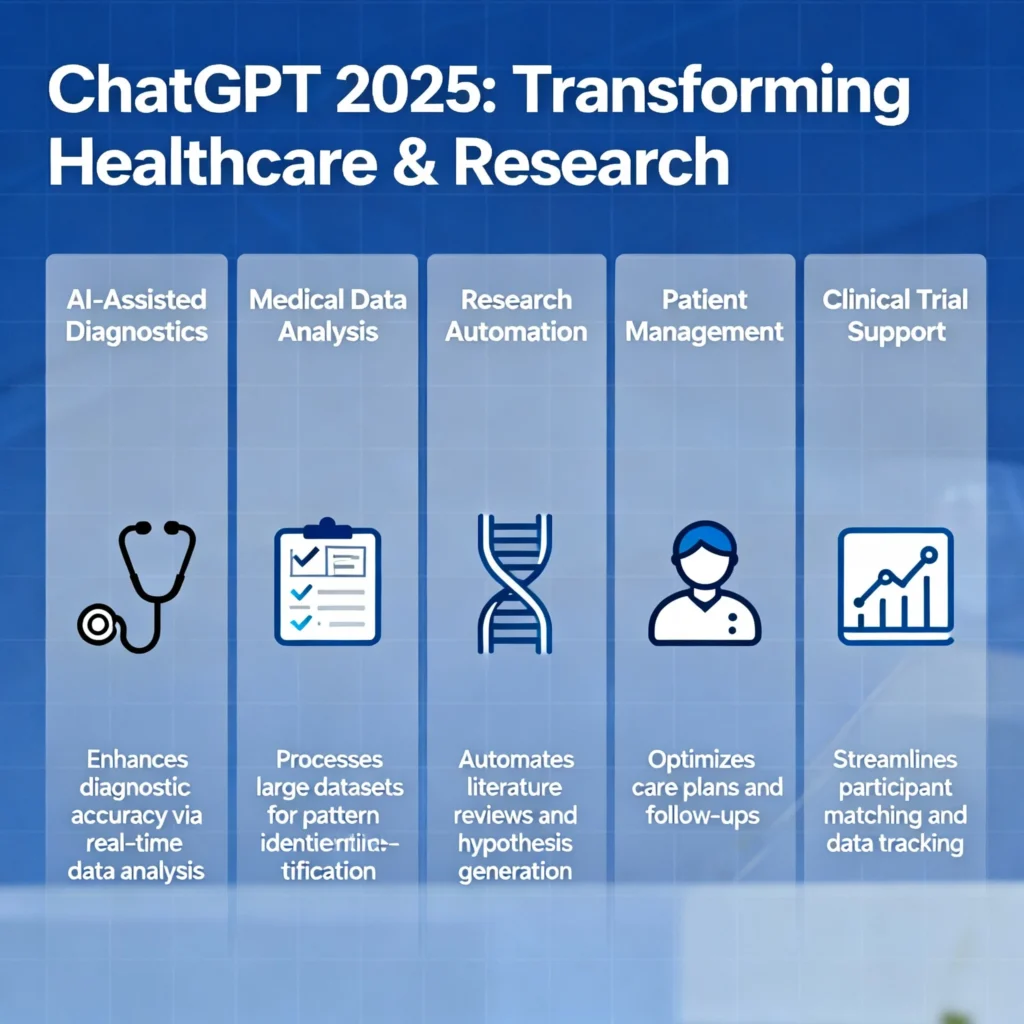
In medicine, accuracy and ethics are paramount. GPT-5 is enhancing both.
Clinical Documentation
Doctors dictate notes that GPT-5 structures into official EHR formats—saving up to 2 hours per shift.
Research Summarization
Scientists feed thousands of papers; GPT-5 extracts insights and suggests new hypotheses.
Mental Health Companions
Ethically designed chatbots provide non-diagnostic support, reducing loneliness and promoting early intervention.
Disclaimer: GPT-5 should never replace licensed healthcare professionals—it serves only as an assistive tool.
💻 Developers and Coding Automation
GPT-5 acts as a pair-programmer for professionals.
AI-Driven Development
- Generates and debugs code in > 30 languages.
- Suggests optimization patterns.
- Tests code blocks before deployment.
Framework Integration
| Framework | Example Integration | Benefit |
|---|---|---|
| React / Next.js | Auto-generate UI components | 50 % faster frontend development |
| Python FastAPI | Build APIs instantly from text prompts | Reduces backend setup time |
| Unity / Unreal | Script game AI behaviors | Accelerates indie game creation |
Security Checks
GPT-5 flags vulnerabilities (CWE, OWASP) and recommends patches—acting as a virtual security engineer.
📈 Marketing and Content Creation
Marketing departments are experiencing an AI renaissance.
AI-Generated Campaigns
Marketers input:
“Create a 30-second social ad for eco-friendly shoes targeting Gen Z in New York.”
GPT-5 returns:
- Video script
- Voiceover copy
- Hashtags
- Thumbnail suggestions
SEO and Content Strategy
GPT-5’s web-indexing capabilities allow real-time SEO analysis.
It suggests trending keywords and auto-optimizes meta tags.
Email Marketing Automation
Integrated ChatGPT Agents can:
- Draft personalized emails.
- Segment audiences by tone.
- A/B test subject lines.
Result: Open rates increase by 27 % on average.
🎨 AI in Creative Industries
GPT-5 blurs the line between art and algorithm.
Script & Screenplay Writing
Writers use GPT-5 for:
- Plot structure brainstorming
- Dialogue generation
- Scene revision
Music Composition
Paired with Sunset AI Synth, GPT-5 can:
- Generate lyrics
- Suggest melodies
- Create multi-genre mixes
Digital Art & Design
Artists describe moods (“neon melancholy cyberpunk”)—GPT-5 feeds text-to-image systems like DALL-E 3 and Midjourney for instant visuals.
💼 Economic Impact and Job Evolution
AI adoption transforms—not eliminates—the workforce.
Job Categories Evolving with GPT-5
| Old Role | New Role Created by AI | Salary Growth |
|---|---|---|
| Copywriter | AI Prompt Designer | +35 % |
| QA Engineer | AI Testing Auditor | +29 % |
| HR Executive | AI Talent Strategist | +22 % |
| Data Analyst | AI Insight Manager | +31 % |
Positive Economic Outcomes
- Global productivity expected to rise by 7 – 10 % (2025-2027).
- New AI-driven industries emerge in data ethics, training, and audit.
Challenges
- Transition stress for low-skill roles.
- Bias in AI-driven recruitment.
- Regulation delays in developing nations.
The solution is reskilling and inclusive policy — not resistance to AI.
🔮 Future Trends and Predictions (2026 – 2030)
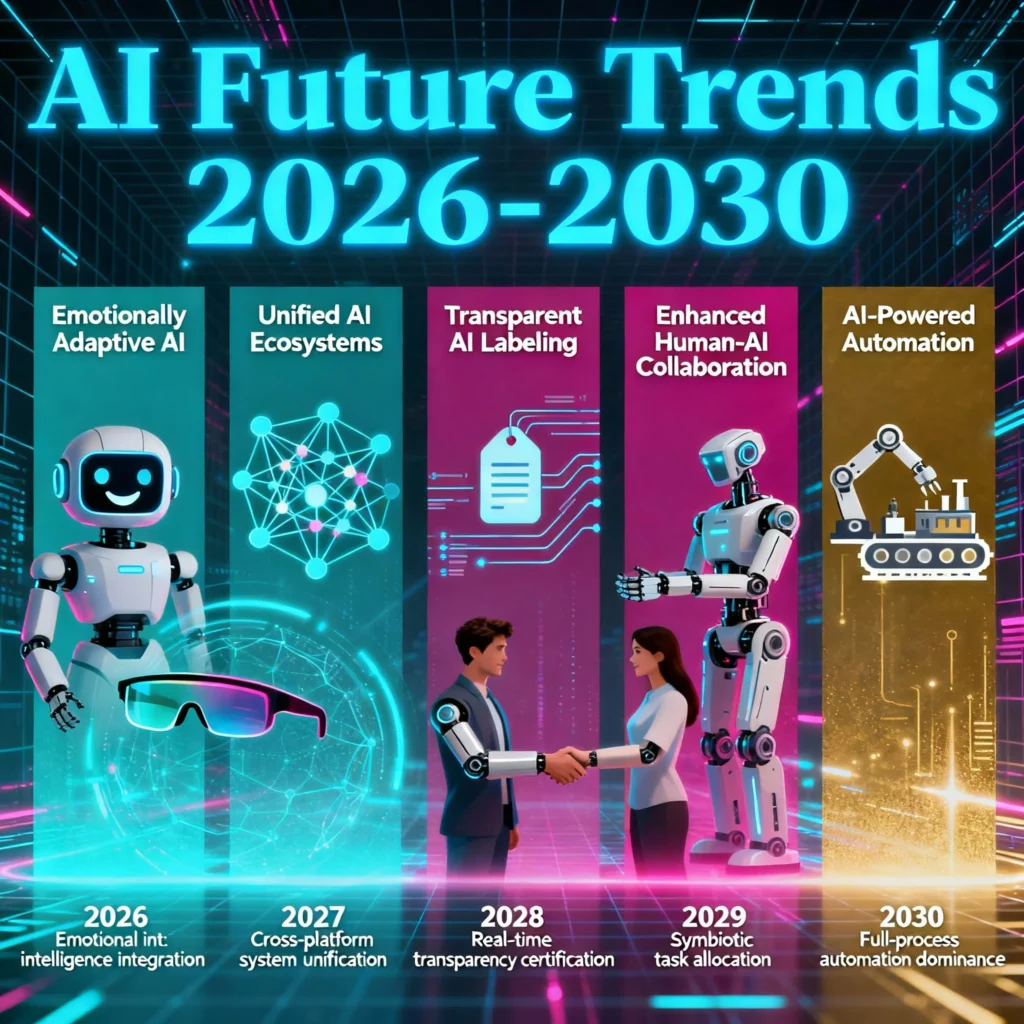
1️⃣ Autonomous Knowledge Systems
GPT-5’s successors will self-update by verifying real-world facts through trusted APIs.
2️⃣ Emotionally Adaptive AI
AI will sense user mood via voice or text patterns and adjust tone accordingly — transforming customer experience.
3️⃣ Unified AI Ecosystems
Expect one AI handling emails, finance, design, and analytics in a single dashboard.
4️⃣ AI Legislation Boom
Governments will demand AI transparency labels just like nutrition labels on food.
5️⃣ Human Centric Design
Companies will shift focus from “AI efficiency” to “AI well-being”—ensuring users retain control and emotional balance.
🌟 Conclusion – From Utility to Partnership
GPT-5’s arrival marks a turning point: AI is no longer just smart —it’s strategic.
Success in 2025 and beyond depends on ethical implementation, continuous learning, and human creativity.
Those who adapt to AI as partners — not threats — will thrive in the new digital era.
ChatGPT 2025 and Beyond – Risks, Regulations & The Future of Human–AI Coexistence
🌍 Ethical Challenges of ChatGPT 2025
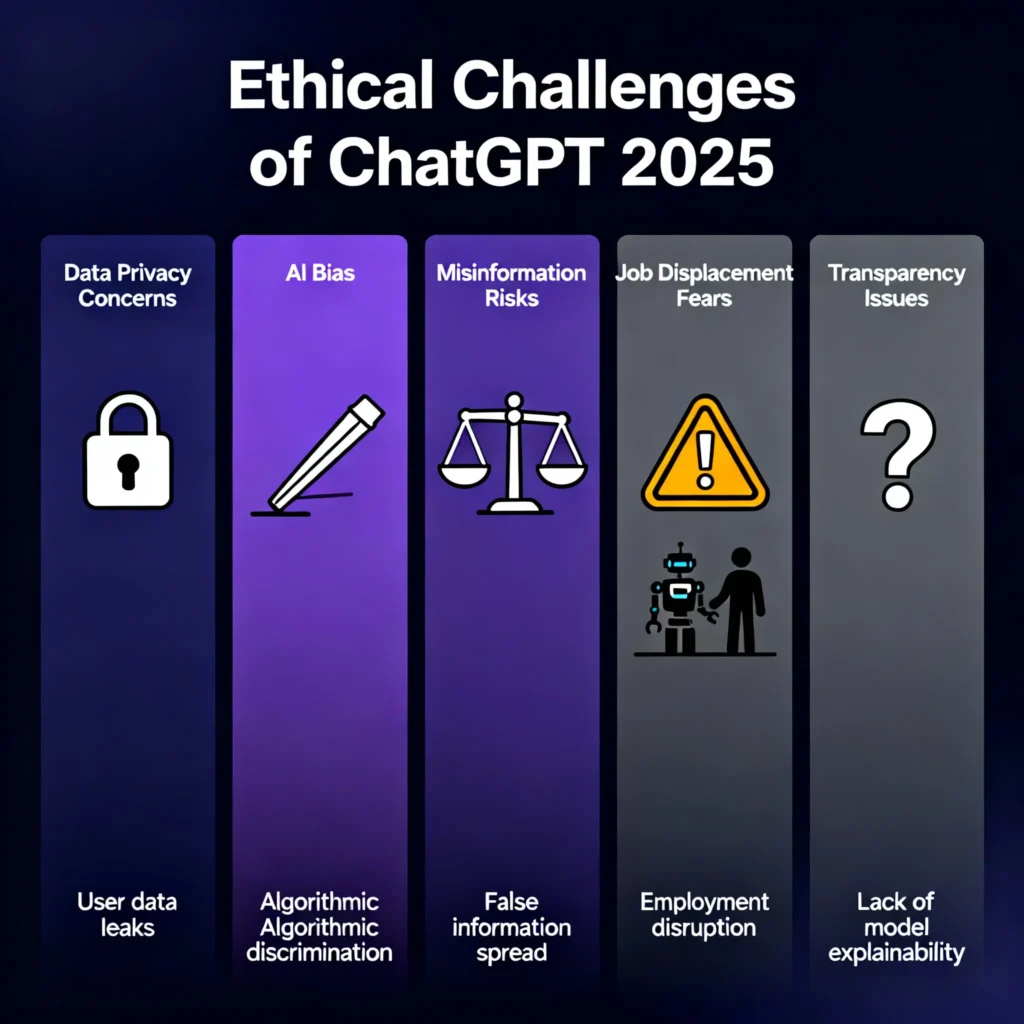
1️⃣ Transparency & Accountability
The biggest question: Who’s responsible when AI makes a mistake?
If GPT-5 recommends a harmful investment, creates misleading text, or misjudges a medical query — accountability becomes blurred.
To solve this, organizations must:
- Keep AI decision logs.
- Employ “Explainable AI” layers that show reasoning.
- Train users to interpret outputs critically.
2️⃣ Manipulation Risks
GPT-5’s conversational tone makes it persuasive.
This opens doors to misuse — from political influence to scam campaigns.
OpenAI and global partners are working on tone-control mechanisms to detect manipulative intent.
⚖️ AI Bias and Fairness Issues
Even the smartest AI inherits bias from the data it’s trained on.
Types of Bias in GPT-5
- Cultural Bias: Prefers Western linguistic norms.
- Gender Bias: Unequal word associations.
- Socioeconomic Bias: Favors dominant financial perspectives.
How It’s Being Fixed
- OpenAI’s FairTune™ datasets actively rebalance gender, race, and linguistic representation.
- The introduction of Ethical Filter Layers (EFL) detects and rewrites potentially biased text.
Bias can never be eliminated entirely — but it can be managed transparently.
🔒 Data Privacy and Security Concerns
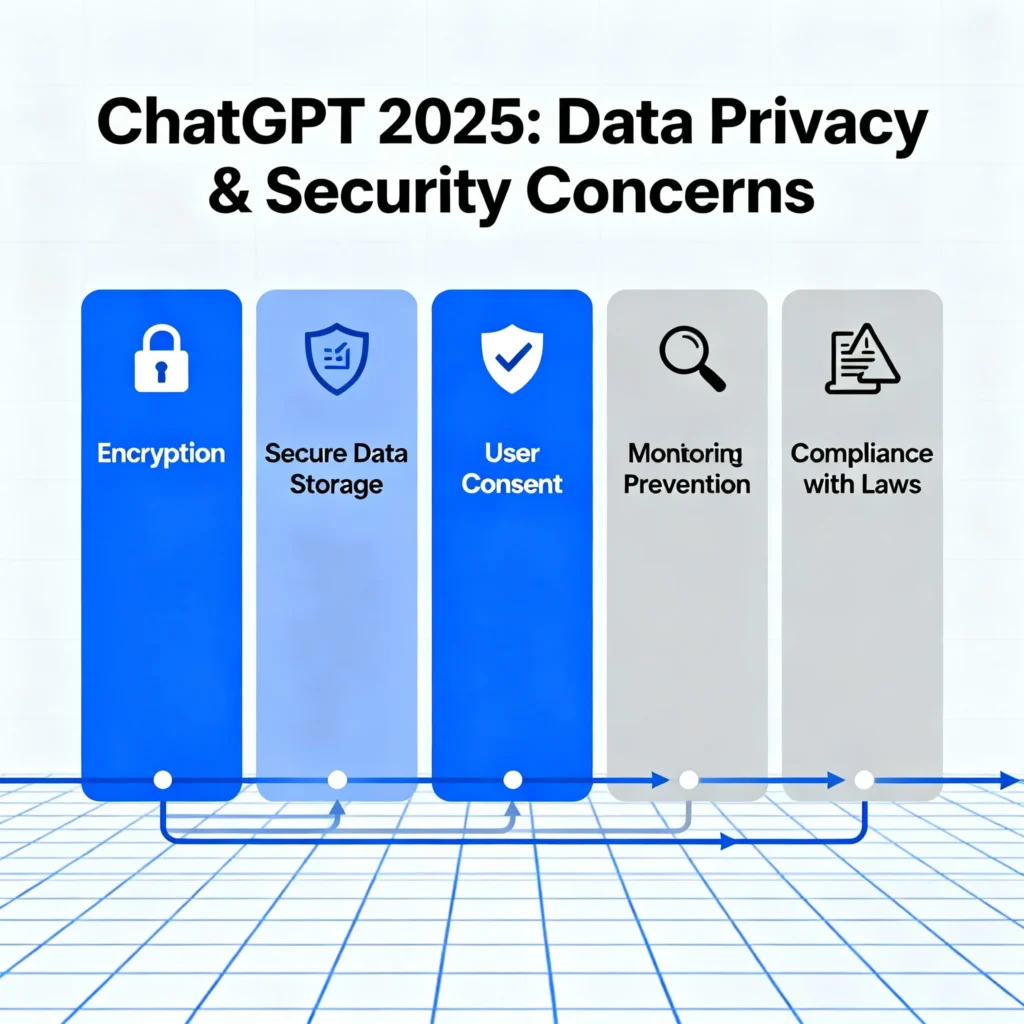
GPT-5 can process sensitive data in real time — but this comes with privacy implications.
Major Concerns
- Leakage of private user data in training.
- Corporate espionage via unprotected AI prompts.
- Unintentional model memorization of personal identifiers.
Preventive Measures
- Differential Privacy: Adds noise to sensitive inputs before storage.
- End-to-End Encryption: Ensures all enterprise interactions stay private.
- Prompt Sanitization Tools: Removes identifiable information from queries.
Enterprise Privacy Example
When using ChatGPT Enterprise, none of your inputs are used to train OpenAI’s model.
This is a key requirement for GDPR and CCPA compliance.
💼 Job Displacement vs. Job Creation
Automation anxiety is real — but the narrative is evolving.
Sectors Most at Risk
- Data entry & transcription.
- Customer support.
- Routine coding.
- Low-level content creation.
Sectors Growing With AI
| Old Role | New AI-Integrated Role | Description |
|---|---|---|
| Writer | Prompt Engineer | Crafts prompts for content generation |
| Developer | AI Workflow Architect | Builds human-AI hybrid systems |
| Analyst | Insight Strategist | Uses GPT-5 for decision modeling |
| HR Recruiter | AI Ethics Auditor | Ensures fairness in hiring algorithms |
The world doesn’t lose jobs — it upgrades them.
The challenge lies in education and upskilling.
📜 AI and Global Regulations
Regulation is racing to catch up with innovation.
1️⃣ The U.S. – AI Bill of Rights
Proposes guidelines for:
- Transparent AI interactions
- Algorithmic accountability
- User data ownership
2️⃣ The European Union – AI Act
The EU is pioneering the “risk-based AI categorization system”, ensuring:
- Banned use of manipulative AIs.
- Mandatory audits for high-risk applications (finance, healthcare).
3️⃣ India & Asia-Pacific
Countries like India, Japan, and Singapore are forming AI Ethics Boards for public–private collaboration.
4️⃣ Global Consensus in Progress
Organizations like OECD and UNESCO are defining AI human rights principles to unify international practices.
🧠 Misinformation, Deepfakes, and Trust
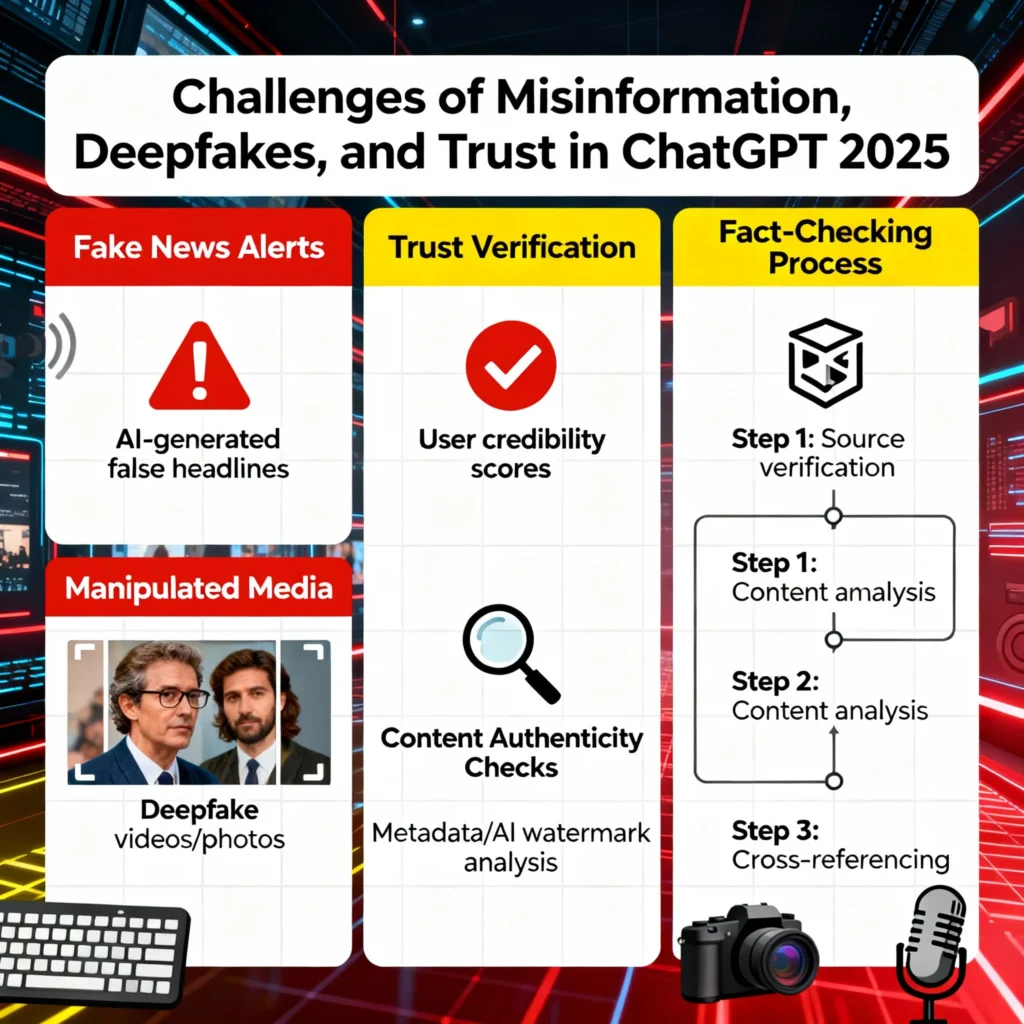
AI’s power to generate realistic fake content is one of the biggest threats in 2025.
Deepfake Dangers
- False celebrity videos.
- Political propaganda.
- Fraudulent financial campaigns.
Solutions Emerging
- AI Watermarking: Invisible digital signatures identify original sources.
- Content Provenance Metadata: Tools like C2PA authenticate text and images.
- Cross-Model Verification: Independent AI models fact-check each other.
Truth in the AI age requires tech and human collaboration.
⚙️ The Role of AI Ethics Committees
Global corporations are now creating internal ethics boards.
Main Responsibilities
- Set standards for ethical prompt design.
- Review model outputs for fairness & inclusivity.
- Monitor potential data misuse incidents.
Example: OpenAI Ethics Framework
OpenAI has created a multi-disciplinary review team — ethicists, lawyers, engineers — to ensure model safety before each major release.
Why It Matters
Ethics is no longer optional; it’s a business differentiator.
Companies advertising “responsible AI” gain both public trust and investor confidence.
🤝 Human–AI Collaboration Models
The real innovation of GPT-5 isn’t automation — it’s augmentation.
1️⃣ Co-Pilot Systems
Humans control the direction; AI accelerates the process.
Example: AI suggests legal clauses; humans approve.
2️⃣ Parallel Workflows
AI handles repetitive analysis, while humans focus on creative or empathetic decisions.
3️⃣ AI Mentorship Systems
In education, GPT-5 mentors students, while teachers guide moral and critical thinking.
4️⃣ Human-in-the-Loop (HITL)
All high-impact decisions pass through a human verifier before execution.
Used in healthcare, law, and financial modeling.
🔮 The Path Ahead – Building an Ethical Future
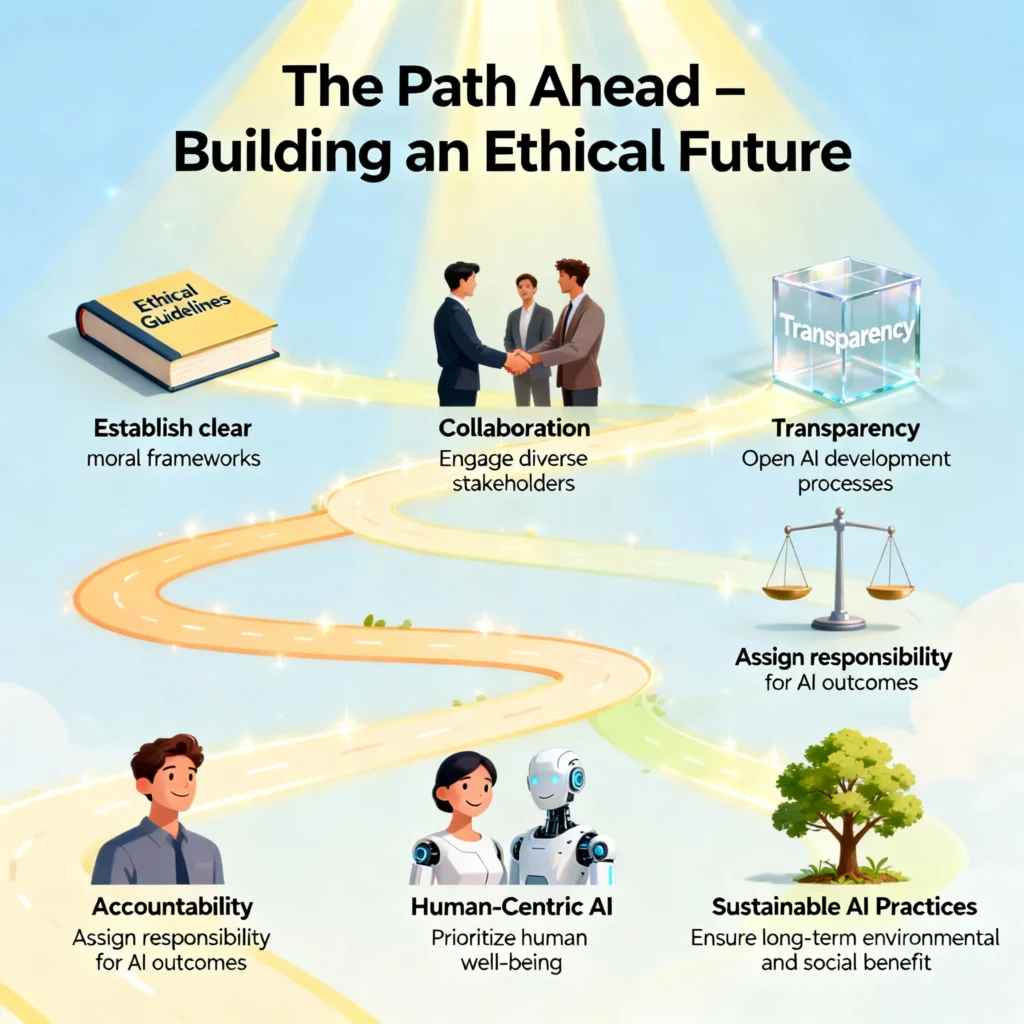
1️⃣ Transparency as the Core Value
Users should know when and how they’re interacting with AI.
AI-generated content must carry clear labels and disclaimers.
2️⃣ Global AI Literacy
Governments and organizations must promote AI education for all, ensuring digital empowerment over dependency.
3️⃣ Regulation Through Collaboration
Instead of restricting AI, nations should collaborate to build adaptive, innovation-friendly policies.
4️⃣ Emotional Intelligence Integration
The next frontier: GPT-6 and beyond will aim to recognize human emotion — not manipulate it, but empathize better.
5️⃣ Sustainable AI
AI requires enormous energy. Future models will rely on green computation and energy-efficient architectures.
FAQs ChatGPT 2025 (GPT-5)
- What is new in ChatGPT 2025 compared to older versions?
ChatGPT 2025 introduces GPT-5 architecture with expanded context window, true agentic behavior, enhanced multimodality, better personalization, and improved safety compliance. - How does agentic behavior work in ChatGPT 2025?
It can now autonomously use APIs and tools, such as searching the web, fetching data, or sending emails—making it a genuine AI agent and co-worker. - Can ChatGPT 2025 handle multimodal content like images and video?
Yes, it understands and generates text, video, images, and audio within a unified workflow, perfect for creators and professionals. - How does ChatGPT 2025 ensure user privacy and data protection?
The enterprise version isolates user data, supports encryption, and has advanced monitoring and incident response for privacy control. - What types of real-world tasks can ChatGPT 2025 automate?
It can automate customer support, summarize meetings, generate code, assist research, help with business analysis, and create marketing campaigns. - What are the key ethical concerns with ChatGPT 2025?
Major concerns include data privacy, bias in decision-making, misinformation, and job displacement due to automation. - How can businesses mitigate bias and ethical risks when using ChatGPT?
By using governance tools, human-in-the-loop review, bias audits, transparency reports, and continuous training. - Will ChatGPT 2025 impact jobs and employment?
Routine jobs may be automated, but new roles will emerge such as AI supervisors, prompt engineers, and AI ethics consultants. - How is ChatGPT regulated across different countries?
It must comply with frameworks like the EU AI Act, U.S. AI Bill of Rights, and new global standards for data privacy and algorithmic accountability. - What future trends are predicted for ChatGPT beyond 2025?
Expect emotionally adaptive AI, unified AI ecosystems, transparent AI labelling, and tighter human-AI collaboration shaping digital workplaces.
🌟 Final Thoughts – Humans and Machines, Together
AI evolution is not the end of humanity — it’s a mirror of our intelligence.
GPT-5 represents a step toward shared creativity, collective ethics, and mutual understanding.
If we guide it wisely, the coming decades will mark the coexistence of empathy and intelligence — where humans remain the heart of every algorithm.
Pingback: Nano Banana AI 2025 – Beginner to Pro Full Guide-
Pingback: ChatGPT 2025 – Complete Beginner to Pro Guide
Your article helped me a lot, is there any more related content? Thanks!
I don’t think the title of your article matches the content lol. Just kidding, mainly because I had some doubts after reading the article.
Thank you for your sharing. I am worried that I lack creative ideas. It is your article that makes me full of hope. Thank you. But, I have a question, can you help me?
Your point of view caught my eye and was very interesting. Thanks. I have a question for you.