
🌟 Introduction: Why AI Video Avatars Are Taking Over in 2025
The year 2025 marks a revolutionary phase for AI-driven content creation. From TikTok clips to corporate explainer videos, AI video avatars are reshaping how the world produces and consumes digital media.
Imagine creating a realistic talking presenter for your YouTube channel, eLearning course, or marketing ad — without hiring actors, setting up cameras, or renting studios. That’s exactly what AI video avatars make possible.
AI avatars can speak, gesture, and express emotion in multiple languages — powered entirely by deep learning, text-to-speech (TTS), and generative video synthesis. Tools like Synthesia, HeyGen, DeepBrain, and Elai.io are already leading this revolution, enabling individuals and businesses to create professional-quality videos in minutes.
The demand for humanless video creation has skyrocketed due to three main reasons:
- 📈 Scalability: Businesses can produce 100+ videos without extra manpower.
- 💰 Affordability: No actors, no cameras, no studios — just AI.
- 🌍 Accessibility: Anyone with text and an idea can now create global-level video content.
In this complete beginner-to-pro guide, you’ll learn everything — from the basics of AI video avatars, how they work, top tools in 2025, to advanced use cases, monetization strategies, and ethical concerns.
🧩 What Are AI Video Avatars? (The Basics Explained Simply)
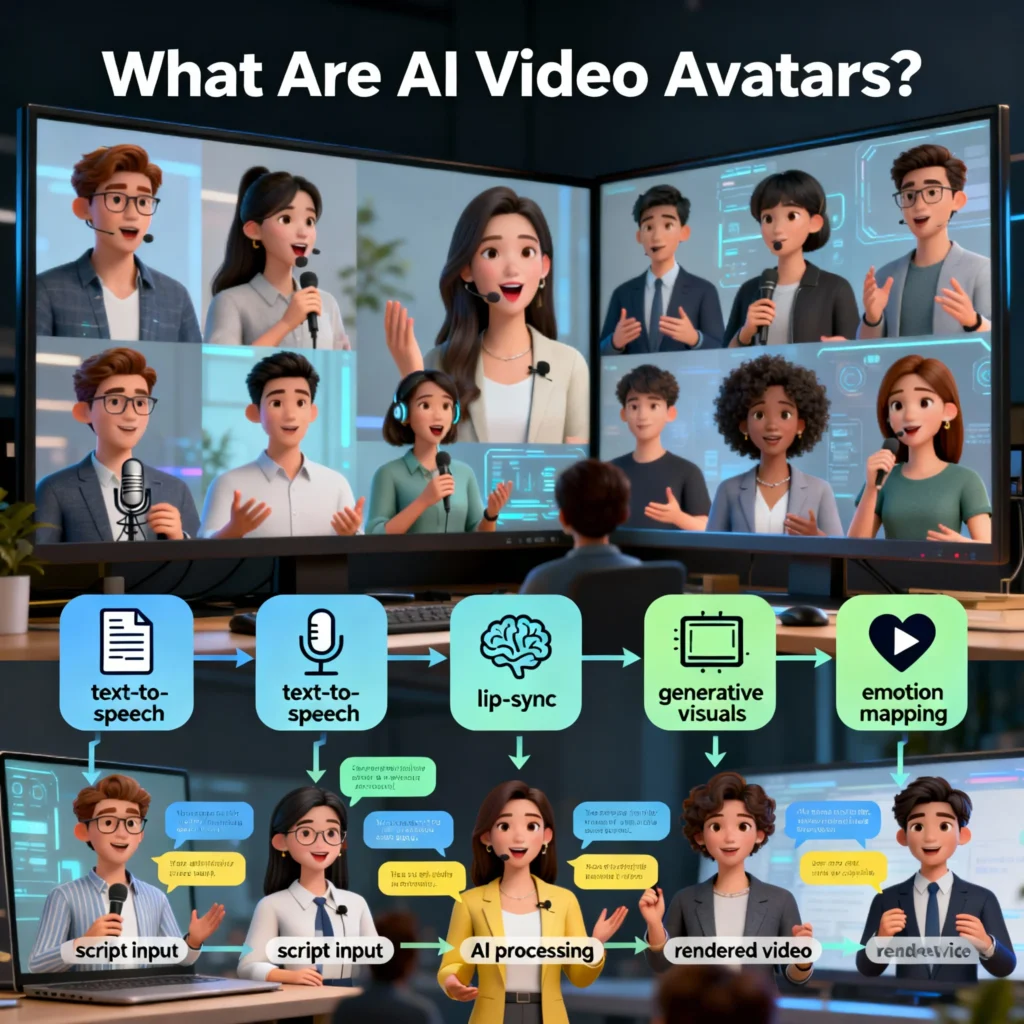
AI Video Avatars are digitally generated humans created using Artificial Intelligence (AI) that can mimic speech, expressions, and gestures.
Think of them as virtual presenters — powered by text inputs. You type a script, and within minutes, the avatar delivers your message as if a real person were speaking.
🧠 Core Components Behind an AI Avatar:
- Text-to-Speech (TTS): Converts your script into natural, human-like speech.
- Lip-Syncing Algorithms: Ensures the avatar’s lips move perfectly with the audio.
- Generative Video Models: Produce lifelike visuals and movements.
- Emotion Mapping: Adds tone, facial expressions, and gestures to match speech.
AI avatars can represent real humans (with consent) or entirely synthetic characters created from scratch. This opens the door for anyone to “clone” themselves digitally for consistent brand or educational content.
⚙️ How AI Video Avatars Work (Technology Behind It)
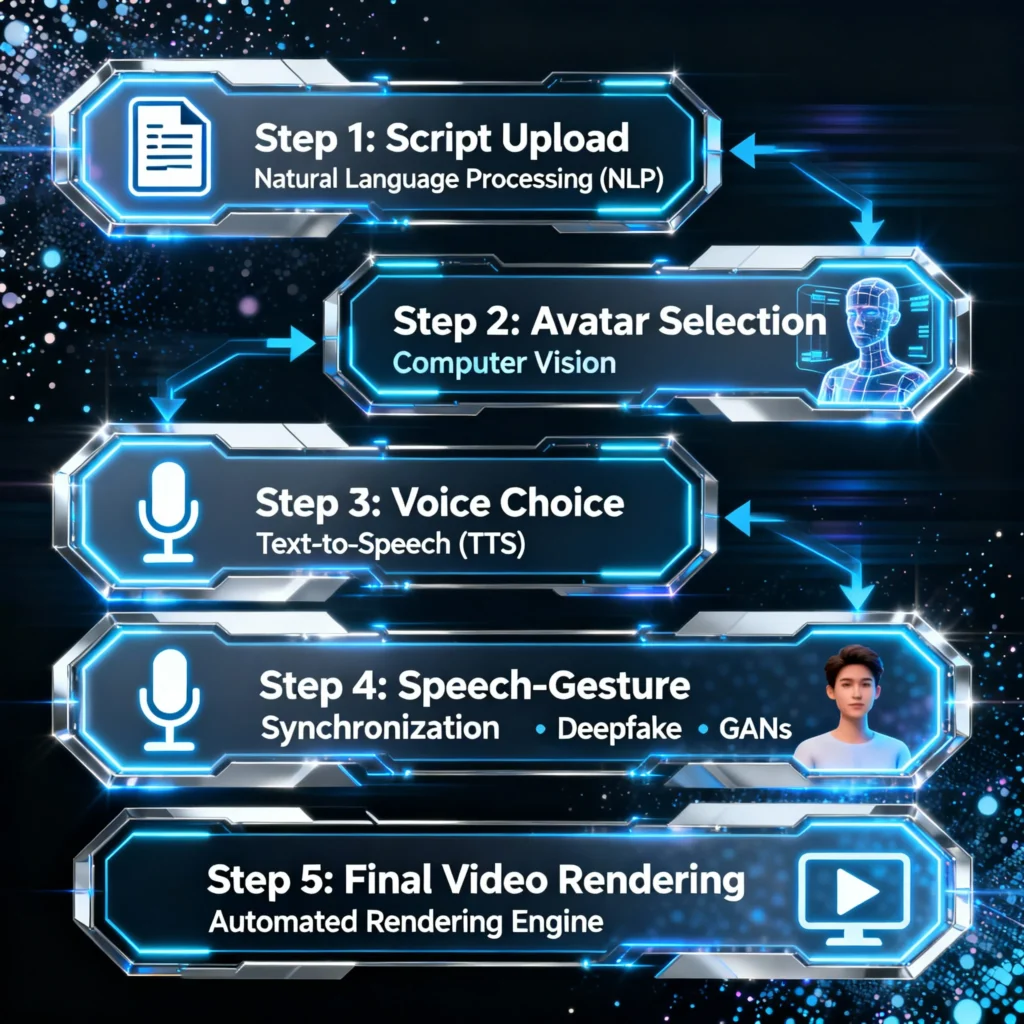
The core technology behind AI avatars combines multiple AI models:
- NLP (Natural Language Processing): Understands written scripts and tone.
- Text-to-Speech Engines (TTS): Generates lifelike audio.
- Computer Vision: Animates lip movements, facial expressions, and body gestures.
- Deepfake & GANs (Generative Adversarial Networks): Build hyper-realistic video layers that resemble human behavior.
The process can be broken down into five steps:
- You upload or type your script.
- Choose an avatar (pre-made or your digital clone).
- Select a voice and language.
- AI synchronizes speech with gestures.
- Final video is rendered automatically.
This entire process can take under 10 minutes, saving creators days of work.
🚀 Key Benefits of Using AI Video Avatars in 2025
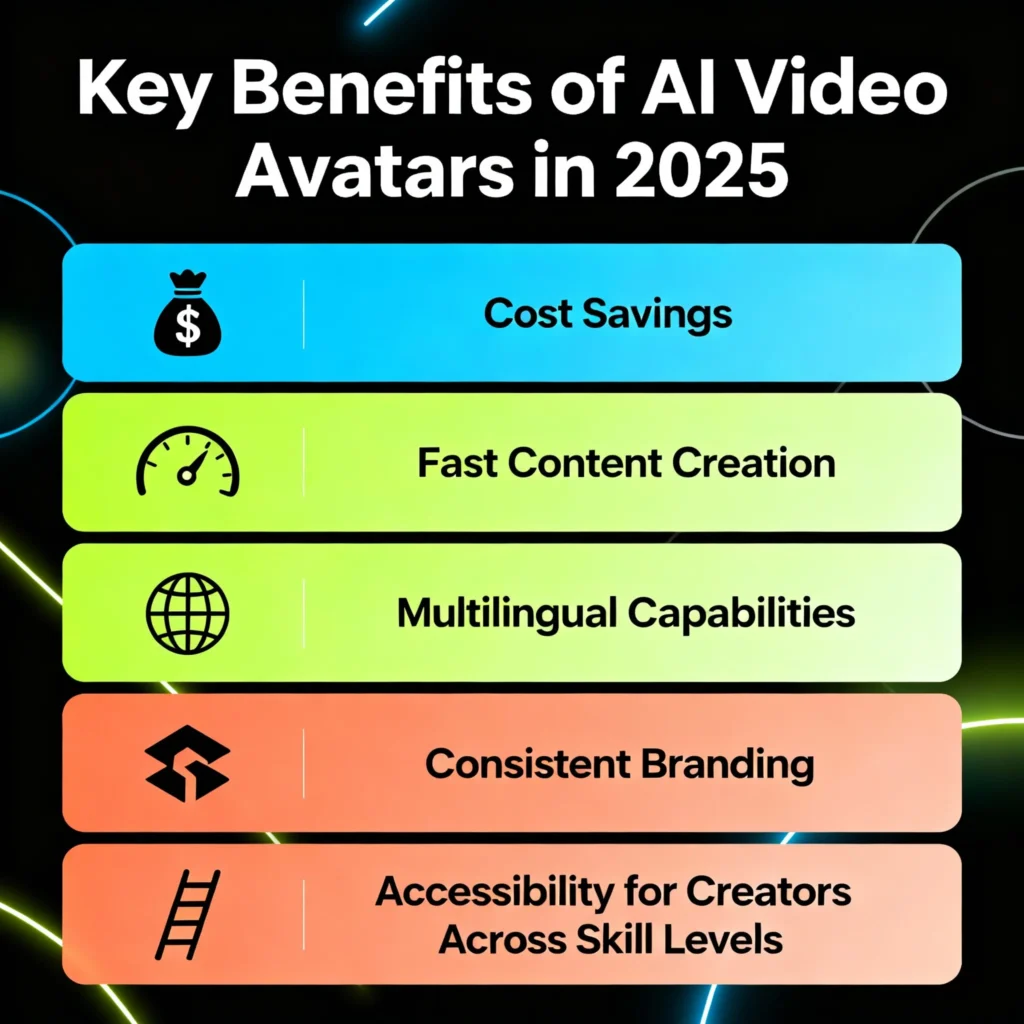
🎬 1. Cost Efficiency
Traditional video production costs thousands of dollars. With AI avatars, you can produce unlimited videos at a fraction of the cost.
⚡ 2. Time Saving
Recordings, re-takes, and editing can take hours. AI avatars deliver ready-to-publish videos in minutes.
🌎 3. Multilingual Communication
AI avatars can instantly translate and voice content in over 80+ languages, helping brands reach global audiences.
🧍 4. Consistent Branding
Your digital avatar always looks and sounds the same, ensuring consistent presentation quality.
💡 5. Accessibility
Anyone — even without technical or creative experience — can now make professional-looking videos.
💼 Top AI Video Avatar Platforms in 2025 (Detailed Comparison)
| Platform | Best For | Pricing | Languages | Highlights |
|---|---|---|---|---|
| Synthesia.io | Businesses, eLearning | From $22/month | 120+ | Studio-grade avatars |
| HeyGen | YouTubers & marketers | From $30/month | 40+ | Custom AI faces |
| Elai.io | Educators | From $23/month | 65+ | Script-to-video automation |
| DeepBrain AI | Corporate videos | From $29/month | 80+ | Humanlike avatars |
| Pictory AI | Content repurposing | From $19/month | 20+ | Auto captioning |
| Colossyan | Training videos | From $25/month | 70+ | AI voice cloning |
Each of these tools allows script-to-video generation, letting you create a humanlike presenter video just by entering text.
🛠️ Step-by-Step Guide: How to Create Your Own AI Video Avatar
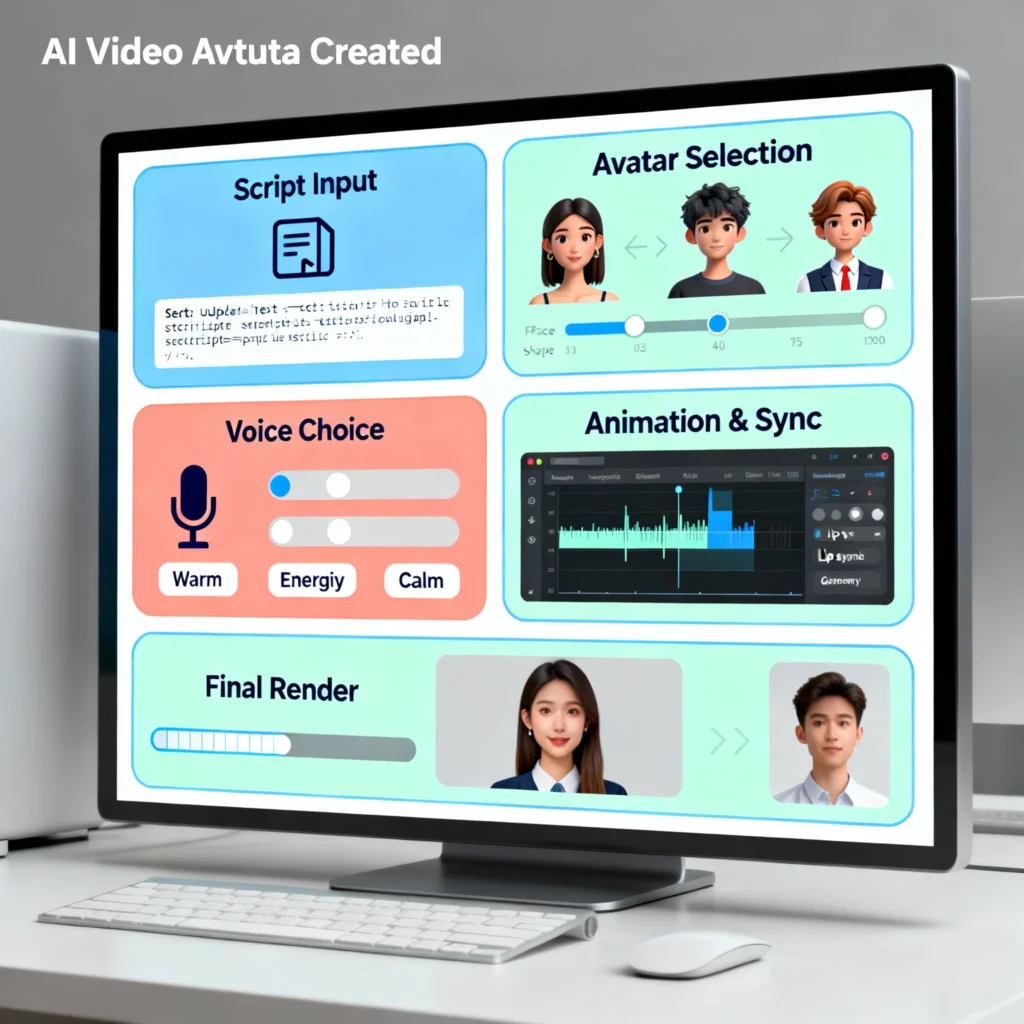
Here’s a simple beginner-friendly process to get started:
Step 1: Choose a Reliable Platform
Pick an AI video avatar tool like Synthesia, HeyGen, or Elai.io based on your budget and needs.
Step 2: Write Your Script
Write a clear, conversational script. Keep sentences short and natural — AI avatars sound best with simple, human-like text.
Step 3: Pick an Avatar and Voice
Select a virtual presenter that matches your tone and target audience. Choose a voice and accent suitable for your market.
Step 4: Customize Background and Brand Elements
Add your logo, text, images, or background music for personalization.
Step 5: Preview and Edit
Most tools let you preview before final rendering. Adjust gestures, pace, and expressions.
Step 6: Export and Publish
Download the final video in HD and upload it to YouTube, social media, or your website.
💡 Creative Use Cases: Where AI Avatars Are Changing Industries
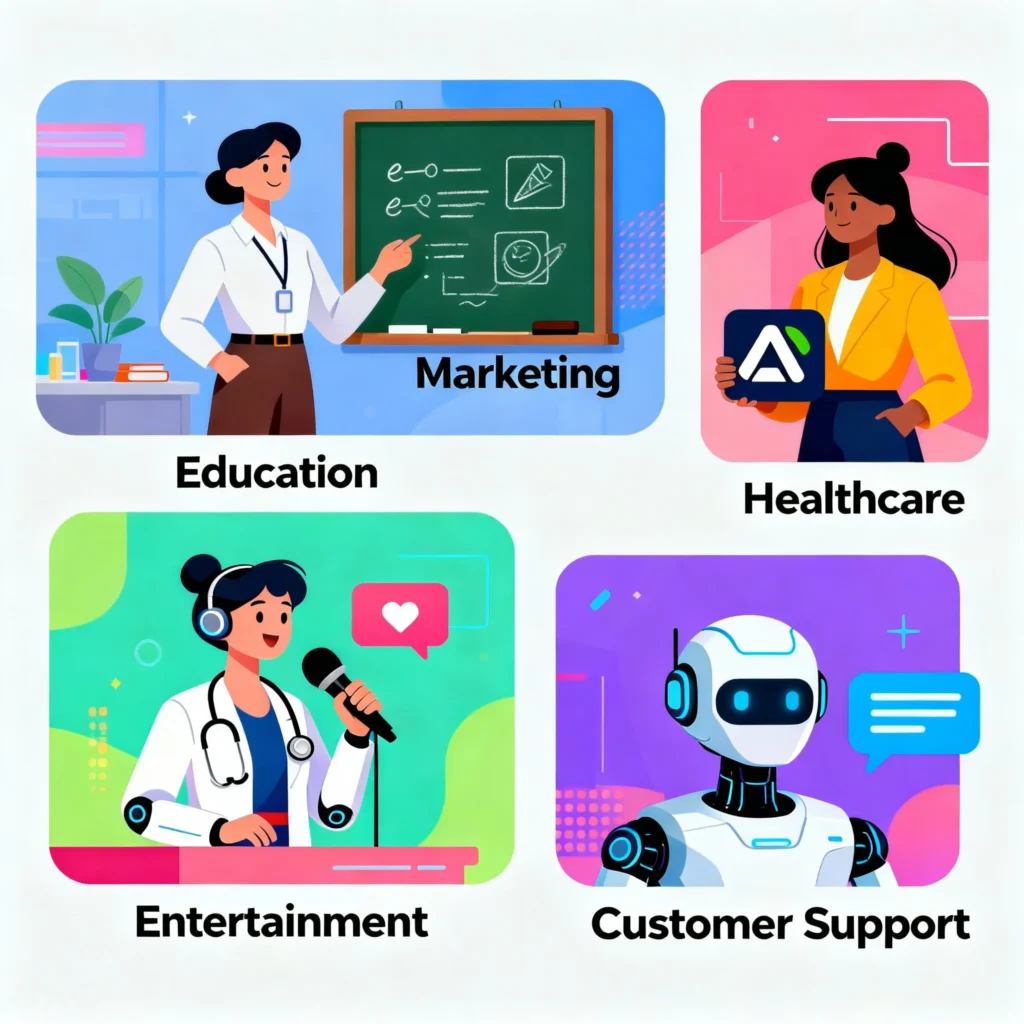
AI avatars are reshaping every field:
- Education: Teachers create personalized lessons with digital tutors.
- Marketing: Brands produce global ads without actors or translation teams.
- Corporate Training: Companies build employee onboarding videos at scale.
- Customer Support: AI avatars answer FAQs visually on websites.
- Entertainment: Virtual influencers and show hosts powered by AI.
- Healthcare: AI-driven guides for patient education.
These use cases show how AI humanless content is moving beyond novelty — it’s becoming a core business asset.
⚠️ Ethical, Legal & Cultural Challenges

AI avatars raise real concerns:
- Deepfake misuse: Avatars can impersonate real people maliciously.
- Consent and ownership: Who owns the likeness of an AI clone?
- Bias: Some avatars lack cultural diversity or exhibit bias in emotion.
- Job displacement: Traditional actors, voice-over artists, and editors may be affected.
Hence, companies are introducing AI transparency policies, ensuring generated avatars come with ethical watermarking and disclosure.
🔮 The Future of AI Video Avatars Beyond 2025
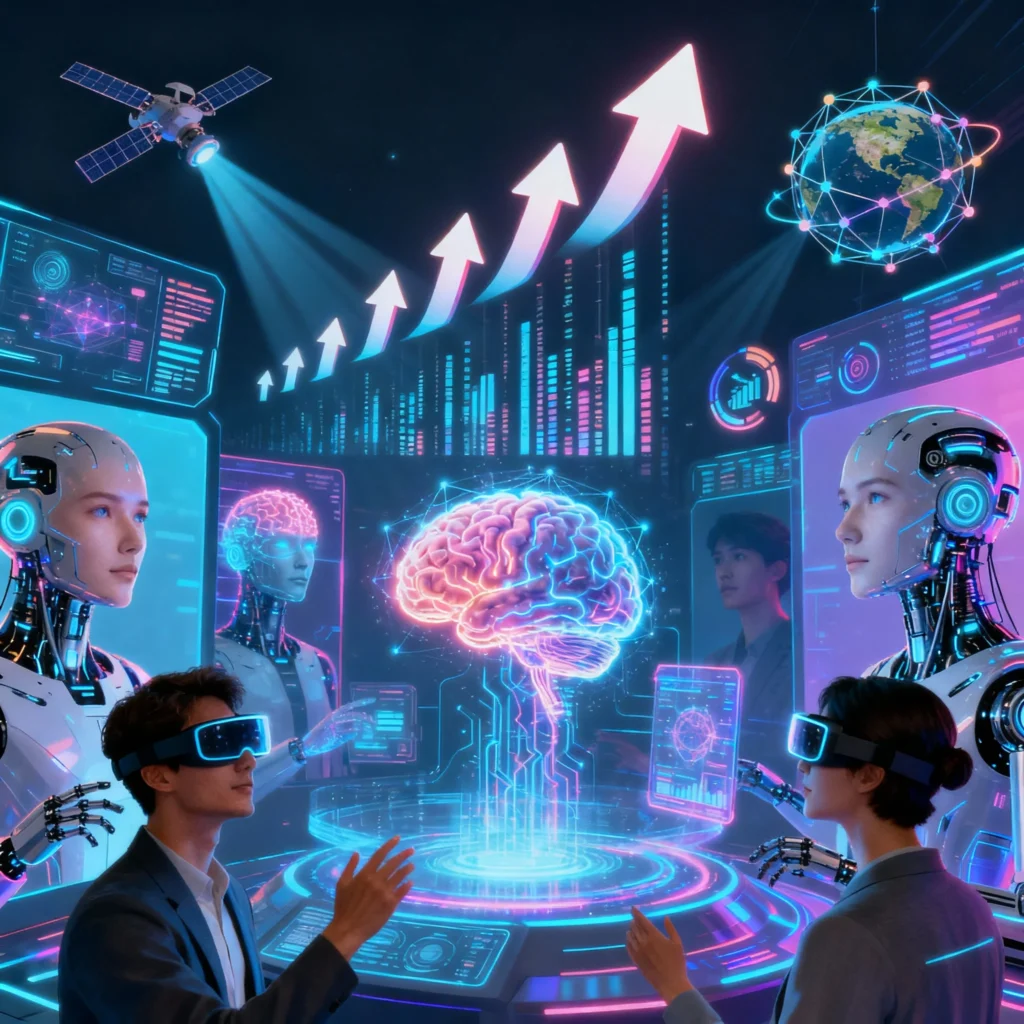
By 2030, AI avatars will evolve into fully interactive digital humans — capable of two-way conversations, emotions, and adaptive learning.
Imagine hosting an AI anchor who interacts with your audience live, remembers viewer preferences, and updates itself — that’s the next generation of content creation.
Future innovations include:
- Real-time emotional responsiveness
- Personalized facial cloning
- Integration with metaverse and AR environments
- Neural voice replication indistinguishable from humans
The line between human and digital identity will continue to blur — and AI avatars will become part of everyday communication.
💰 Monetization Strategies & Affiliate Opportunities
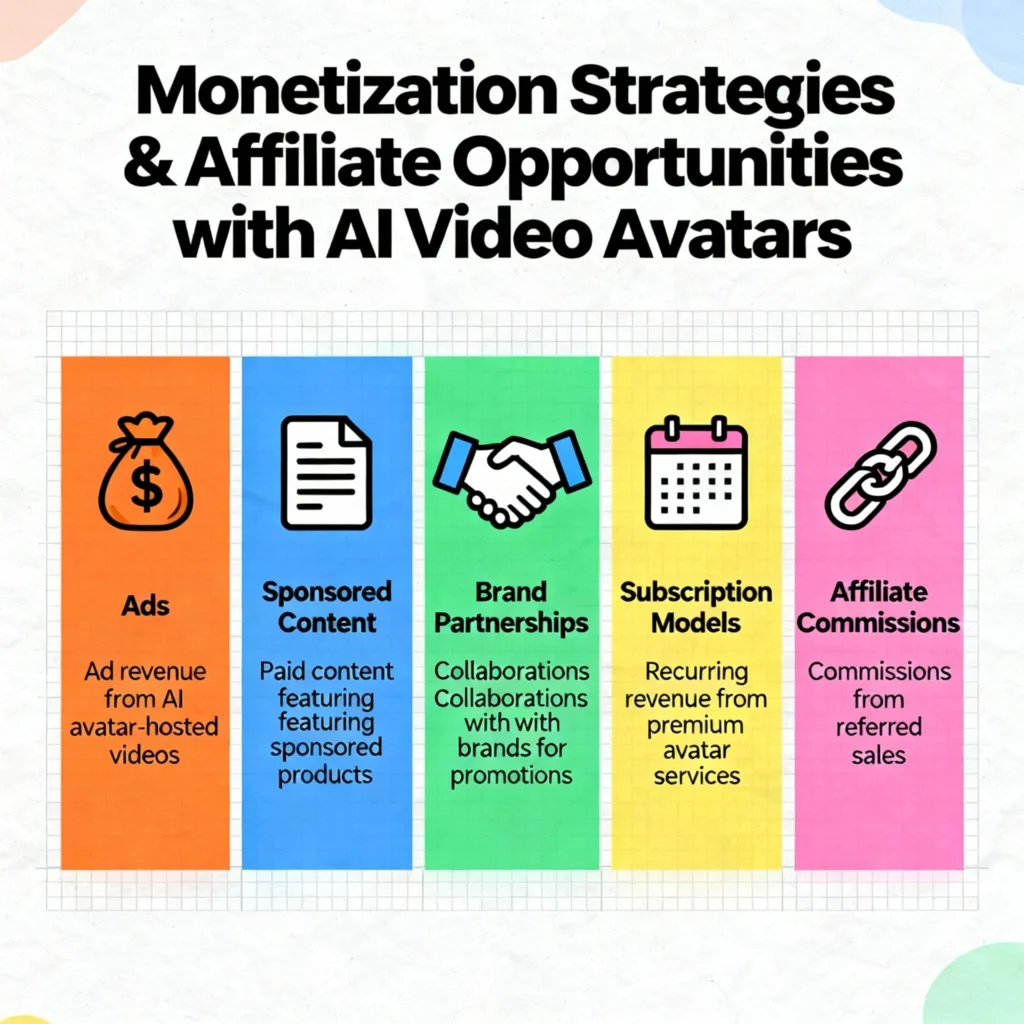
Want to earn from AI avatars? Here’s how:
- YouTube Automation: Create faceless channels using AI avatars.
- Affiliate Marketing: Review AI avatar tools and include referral links.
- Course Creation: Sell digital courses narrated by AI presenters.
- Corporate Services: Offer custom avatar video creation as a business.
- Brand Influencing: Use your digital twin to promote products.
These strategies are 100% AdSense-friendly and scalable.
❓ Top 10 FAQs About AI Video Avatars
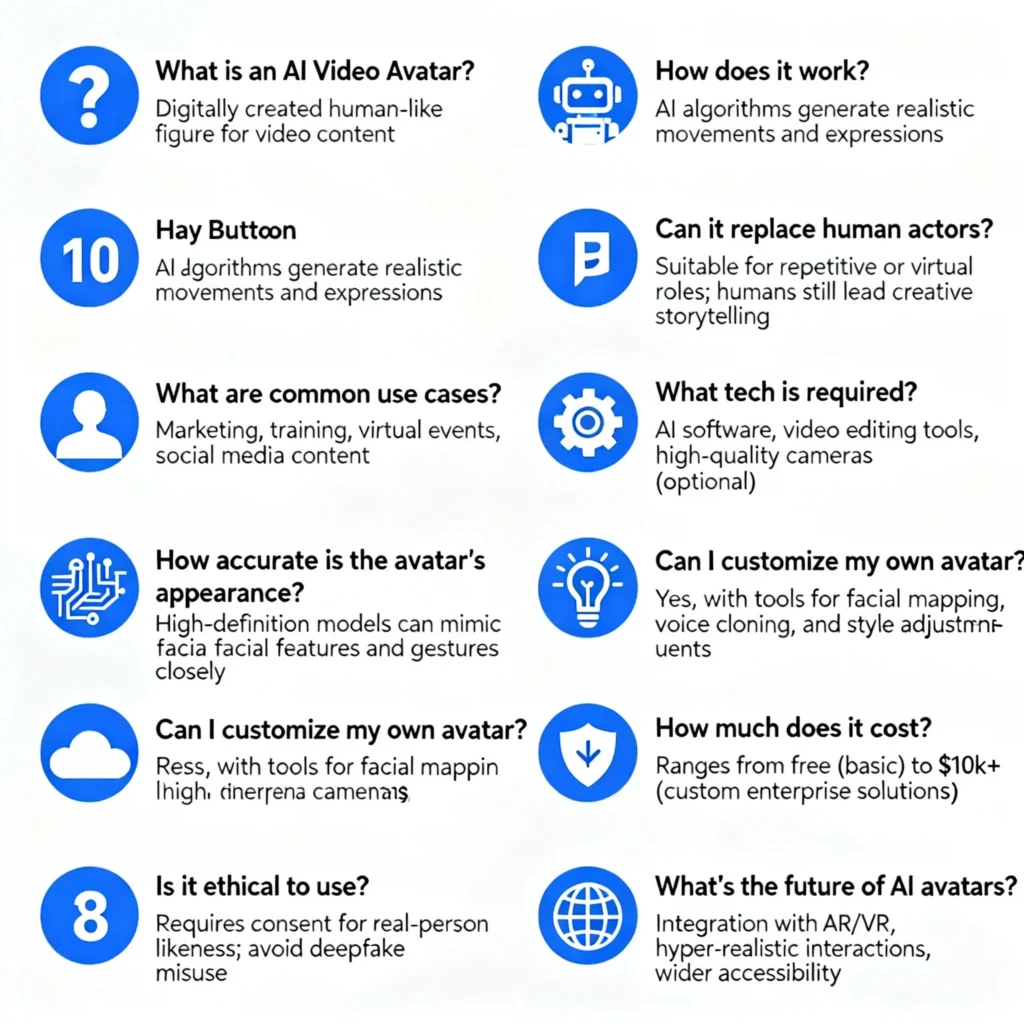
Q1: Are AI video avatars real people?
No. They are digital humans powered by AI algorithms, though they can represent real people with consent.
Q2: Can I make my own avatar?
Yes. Many tools let you upload a short video to clone your appearance and voice.
Q3: Do I need technical skills?
Not at all — most tools are drag-and-drop and script-based.
Q4: Is AI avatar video monetizable on YouTube?
Absolutely. You can monetize faceless videos with unique voiceovers and original scripts.
Q5: How long does it take to make a video?
Usually under 10 minutes, depending on rendering speed.
Q6: Can I use AI avatars in commercial ads?
Yes, if the license allows it. Always check terms of use.
Q7: What’s the best AI video tool for beginners?
Synthesia.io and HeyGen are beginner-friendly with affordable plans.
Q8: Will AI avatars replace human creators?
Not entirely — they complement humans by saving time and scaling production.
Q9: Are AI avatars available in regional languages?
Yes, most tools support Hindi, Spanish, French, Arabic, and more.
Q10: Is there a free AI avatar tool?
You can try Pictory or Elai.io free plans for basic use.
🌍 Final Thoughts – The Rise of Humanless Content Creation
AI video avatars represent a massive shift in digital communication and automation.
They’re not replacing creativity — they’re amplifying it.
From entrepreneurs to educators, anyone can now create studio-quality content without production stress.
As 2025 unfolds, brands and individuals who adapt to AI-powered creation will have a decisive edge. The real question isn’t “Will AI replace humans?” — it’s “Will you use AI to amplify yourself?”
Thank you for your sharing. I am worried that I lack creative ideas. It is your article that makes me full of hope. Thank you. But, I have a question, can you help me?
Thanks for sharing. I read many of your blog posts, cool, your blog is very good.